US–Iran War Unfolds: Is World War III On the Horizon?
 Factverse Insights|Politics|11 min read|Mar 17, 2026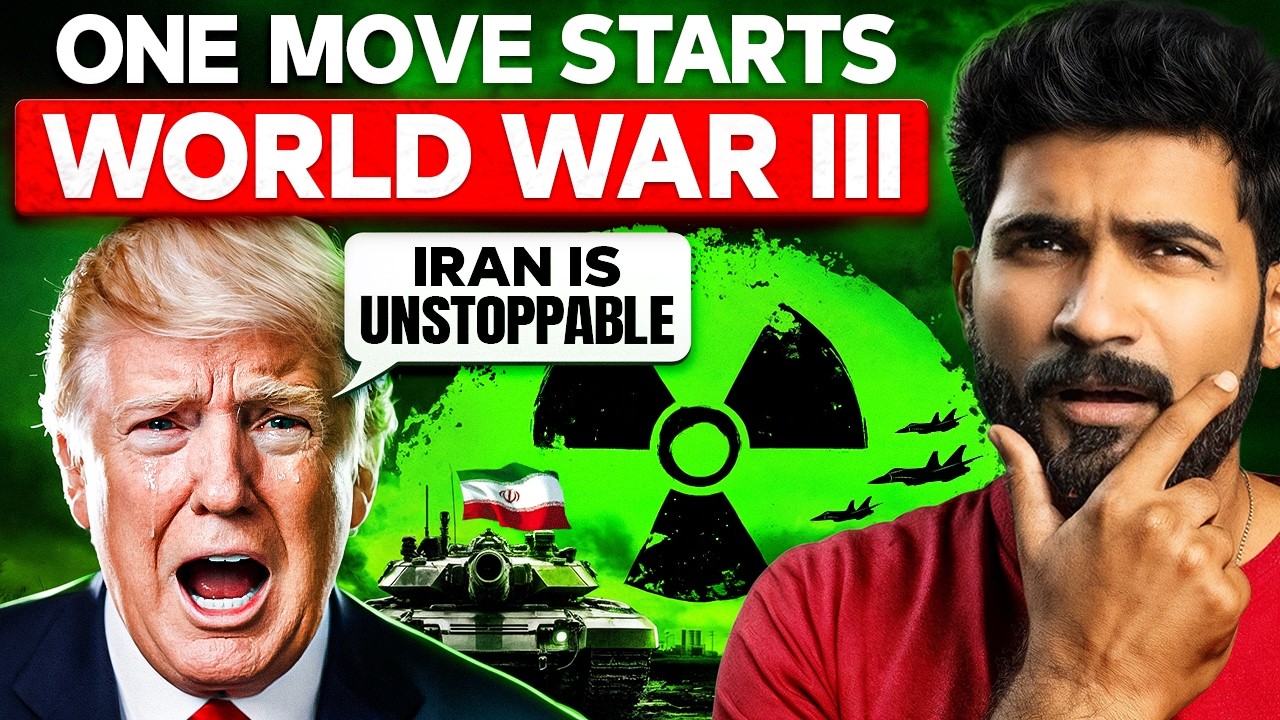
Abhi and Niyu delve into the US–Iran conflict, exploring horizontal escalation, nuclear threats, AI in warfare, and its global impact as tensions rise towards a potential World War III.
US–Iran War Unfolds: Is World War III On the Horizon?
In a captivating episode on Will Trump start World War 3? USA Iran War Case Study by Abhi and Niyu, the hosts dissect the ongoing conflict between the USA and Iran, exploring how regional tensions might be the spark that ignites a global confrontation. The discussion provides a detailed analysis of how modern warfare, amplified by technology and international alliances, could escalate into a conflict resembling a Third World War.
In this article, we aim to encapsulate the key insights from the video so that even if you do not watch it, you gain a comprehensive understanding of the serious questions posed: How is this conflict spreading globally? Is nuclear warfare looming? And what does it mean for nations like India?
Historic Parallels and the Changing Nature of War
The video begins by drawing parallels between the world wars of the 20th century and the rapidly evolving nature of modern conflicts. The hosts point out that during World War I, 30 countries were involved; World War II saw around 50 nations participate; and in just two weeks of the current conflict between the US and Iran, involvement spans 20 countries including Iran, Dubai, Qatar, and Bahrain. One of the hosts notes, "The attack on Dubai airport is proof that this war is not going to end so soon," hinting at the present dynamics that are turning a regional conflict into a multi-national crisis.
Evolving Warfare: More Than Conventional Battles
A defining feature that sets the modern conflict apart is the integration of advanced technologies like nuclear capabilities, cyber warfare, and artificial intelligence (AI). Notably, the USA’s capability to launch nuclear weapons on Iran is highlighted as a dangerous lever of power, with American military assets such as the B-52 bomber in the spotlight. "This is America's most dangerous weapon," one of the speakers declares, emphasizing how nuclear threat remains a central pillar of modern geopolitical strategy.
While nuclear weapons always cast a long shadow over international relations, the video also discusses how cyber warfare can target crucial infrastructures, such as energy grids, and be as devastating as physical warfare. The transformation of combat with new-age weapons, including drones and AI, marks a seismic shift from traditional military strategies.
Horizontal Escalation: A New Paradigm of Conflict
One of the key concepts discussed is that of Horizontal Escalation. This strategy, as explained by international security expert Professor Robert Pei and referenced in the Diary of a CEO podcast, involves launching coordinated attacks on multiple targets simultaneously. Such a strategy not only destabilizes specific regions but also ripples across global markets and political structures.
The Strategies and Their Impact
According to the analysis, by attacking multiple fronts—from critical chokepoints like the Strait of Hormuz to strategic communications in the Middle East—this approach forces nations to confront economic disruptions and domestic political turmoil. The host explains, "An attack on geography, the state of Hormuz, will increase the prices of oil and gas worldwide," drawing a direct line between military tactics and global economic repercussions.
Regional nations like Bahrain and the UAE face internal challenges as protests erupt over increased geopolitical risk. In the Gulf, the fallout extends beyond immediate physical destruction. Countries are forced to reconsider their alliances, with Iran punishing its neighbors for hosting American military bases. This strategy of horizontal escalation is designed to ensure that not only direct adversaries suffer, but that countries with indirect links are also drawn into the conflict.
The Global Stake: Involvement Beyond the Middle East
The video makes it clear that while the conflict is centered in the Middle East, the stakes are global. The involvement of other world powers escalates the severity of the situation:
- Europe: Multiple European nations have started a naval build-up near Cyprus. Turkey, sharing borders with Iran and Syria, emerges as a key player in any ground operation that might be initiated by the US or NATO.
- Russia: Acting as an intelligence ally to Iran, Russia identifies and helps target American assets. There is speculation that Russia might also be producing technology like the Shahid drone to support Iran’s military efforts.
- China: With a clear interest in the region, China is surrounded by its focus on Taiwan while also assisting Iran with propaganda, financial support, and oil deals—importantly, 80% of its oil supply comes from Iran, often paid in Yuan.
- North Korea: The unpredictable state of North Korea, described as eager to "destroy the world," has begun its own missile trials, further complicating an already tense international landscape.
These developments underscore a worrying scenario where the regional conflict has the potential to morph into a global crisis. As one part of the video questions, "If these tensions keep escalating, are we on the brink of World War III?"
The Nuclear Factor: A Double-Edged Sword
The discussion pivots to one of the most alarming aspects of modern-day warfare: nuclear threats. The capacity for nuclear strikes, especially by the US, is repeatedly emphasized. The Pentagon’s initiation of AI tools to scope targets, combined with the backdrop of America’s nuclear triad, presents a sobering picture of a world where traditional warfare is intertwined with nuclear risk.
Nuclear Deterrence and Strategic Dilemmas
In the talk, the hosts underscored that even though America shows off its nuclear capabilities, "America is not serious about nuclear war," suggesting these as warnings rather than immediate threats. The reality, however, is complex. With a rising number of nuclear-armed nations and the evolution of nuclear technology since 1945, the global power balance is precarious.
The conversation further examines America's strategic predicament. Experts point out that if Iran continues to develop its nuclear program, the US might be forced into a long-drawn war or a decisive military intervention. The case of Ukraine serves as an ominous reminder of what happens when nuclear deterrence vanishes—Ukraine dismantled its nuclear arsenal in the 90s and now faces existential threats. In contrast, the video reminds us, every nucleus of power seeks a nuclear deterrent as a safeguard against potential attacks.
Trump's administration is portrayed as being at a critical crossroads. With mid-term elections on the horizon, the political ramifications of either backing down or escalating the warfare are enormous. The host exposes two challenging choices for Trump:
- Cut Losses: Step back in hopes of short-term relief, which may facilitate Iran’s nuclear advancements.
- Escalate Offensively: Increase military actions until Iran is forced to disarm its nuclear capabilities, a scenario that comes with its own political and military risks.
AI Revolution in Modern Warfare
The rising use of AI in military operations marks a significant shift in how wars are fought. The video takes an in-depth look at how emerging AI tools are integrated into the current conflict.
Tactical Precision and Cyber Warfare
For the first time in history, the Pentagon is using artificial intelligence to determine precise targets. This inclusion of AI is not limited to tactical planning; it also extends to information warfare and propaganda. Iranian media, for instance, has employed AI-generated images and videos to disseminate misinformation—one notable instance being the fabricated video claiming the killing of Netanyahu, which was immediately countered by both Iranian and American officials.
This dual use of technology—both in kinetic and informational domains—is transforming the very nature of modern warfare. It highlights a future where the power to shape reality and perception becomes as crucial as nuclear firepower. In this new arena, economic power and technological capabilities determine which nation will prevail in the long run.
Business and Career Opportunities Amid Conflict
Curiously, the video also touches upon how the crisis has spurred opportunities in the realm of artificial intelligence. With the rapid spread of AI tools, businesses are leveraging these technologies to streamline operations, and professionals are upskilling to match evolving market demands. A segment of the discussion is dedicated to promoting a free 16-hour AI training program by Outskill—underscoring that while geopolitical tensions pose significant threats, they also open new avenues for growth and employment on a global scale.
Impact on India: Energy Security and National Preparedness
No discussion on global conflict is complete without addressing its impact on vulnerable regions. The video draws attention to India, which is already feeling the aftershocks of the US–Iran war.
Energy Security under Threat
India’s energy security is intricately linked to the geopolitical dynamics of the Middle East. With the Strait of Hormuz being a critical route for global oil supply—accounting for 25% of global sea trade—the current tensions have forced India to deploy its navy for protection. With only 10% of its oil now transferred through the region, the uncertainty and potential threats to Indian-flagged ships are a growing concern. The hosts poignantly ask, "But if an Indian ship gets damaged, can India remain neutral?" This question reflects the broader dilemma of energy import reliance versus the risks of getting entangled in regional conflict.
Domestic Preparedness and Civilian Safety
Beyond energy concerns, the speakers raise an urgent question about national preparedness. With constant missile alerts and the fear of trauma reminiscent of multiple historical conflicts, public safety measures in India come under scrutiny. The video calls on citizens and government authorities to consider precautions, such as establishing public shelters and clear emergency protocols. The analogy with Israeli missile alert systems is drawn to emphasize that despite longstanding beliefs of being insulated from such direct impacts, no country is immune when global warfare escalates.
The hosts provide poignant real-life examples: increased prices of LPG and raw materials in local markets, disrupted small businesses, and even anecdotes from Gujarat’s Morbi town where tile production is faltering—all pointing to a broader economic fallout. They argue that these signs, although not immediately catastrophic, are precursors to more severe disruptions if the conflict grows in scale.
Global Opinions and the Propaganda War
The video also takes note of the shifting allegiances and the role that propaganda plays in swaying public opinion. On social media, viewers share diverse viewpoints about the conflict. While some express staunch support for Israel and the USA, others champion Iran’s cause. A minority even emphasize an India-centric perspective, highlighting how the ramifications of this warfare will eventually be felt in their homeland.
The Role of Information Warfare
The intertwining of technology and propaganda is a recurring motif throughout the episode. As one host remarks, "Information warfare is going to play an important role in the Third World War," alluding to the use of AI not just in targeting but also in controlling the narrative. With deepfakes, fabricated news clips, and strategic misinformation campaigns, the future of warfare appears increasingly digital and manipulative, with every nation vying to control both the battlefields and the minds of their populations.
Conclusion: Navigating a Precarious Future
The analysis provided by Abhi and Niyu paints a stark picture of a world on the brink of an escalated conflict that could easily spiral into a global confrontation. Combining historical context, advanced military technology, digital propaganda, and strategic foresight, the discussion raises critical questions about the nature of modern warfare.
The episode not only chronicles the unfolding US–Iran conflict but also delves deeply into its broader international implications. It examines how horizontal escalation, nuclear threats, and the advent of AI in warfare are reshaping global power dynamics. With the media playing a crucial role, the narrative for both domestic populations and international observers is one of uncertainty—an uncertainty that challenges policymakers to take immediate and thoughtful actions.
For nations like India, the message is clear: while energy security and economic stability are key, preparedness for the unforeseen is equally important. The discussion concludes with a call-to-action, urging governments and citizens alike to judiciously plan for potential crises, reinforcing the notion that in today’s interconnected world, the ripple effects of regional conflict are both inevitable and far-reaching.
With historical precedent reminding us that even seemingly localized conflicts can evolve into full-scale wars, Abhi and Niyu leave viewers with one resonant question: "Will we be prepared for what comes next?" As the echoes of potential escalations reverberate across continents, the future of global geopolitics remains deeply uncertain.
This detailed exploration not only sheds light on the multifaceted challenges of modern warfare but also emphasizes that the next chapters in this global saga are yet to be written. It serves as a stark reminder that in the dynamic climate of international relations, strategic decisions made today could determine the geopolitical landscape for generations to come.
Stay tuned for more insights and expert analysis as the world watches these events unfold, raising critical questions about what truly constitutes a world war in the 21st century.
Read more to understand how technology, strategy, and human decision-making converge to shape our shared future.