7 Critical Insights on the US–Iran Ceasefire: What’s Next?
 Factverse Insights|Politics|14 min read|Apr 16, 2026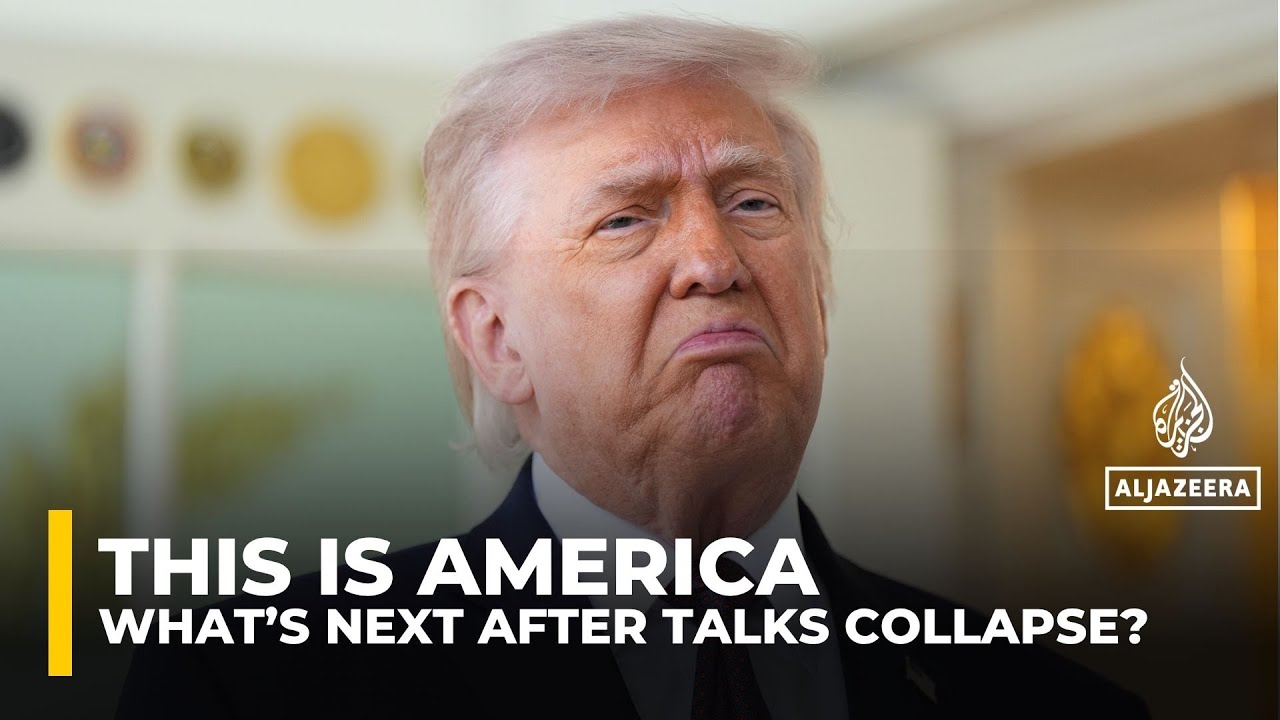
Explore key insights from the US–Iran ceasefire collapse, why talks stuttered and what dramatic diplomatic and military moves could follow.
In this episode of This is America on Al Jazeera English, the discussion focused on the rapidly deteriorating ceasefire between the U.S. and Iran. With only eight days left on the ceasefire and high-stakes negotiations collapsing, the video lays out a complex array of diplomatic and military options that may shape the future of Middle Eastern relations. Viewers learn why the current talks have stalled and what steps the U.S. might take next.
What Led to the Collapse of Critical Talks?
During the broadcast, U.S. officials detailed how 21 hours of high-tension discussions in Islamabad ultimately ended without a binding agreement. Alan Fischer from the White House and Mike Hannah from the State Department provided a candid look at the dynamics at play. Fischer explained, "We've made it very clear what our red lines are, what things we're willing to accommodate on, and what things we're not willing to accommodate." However, he noted that Iran’s unwillingness to meet these demands forced the current stalemate. The talk underscored that despite prolonged dialogue, each side maintained maximalist positions, making meaningful compromise difficult.
This episode highlighted that while both parties are exploring their options, a significant trust deficit remains. Historically, previous rounds of negotiations have been marred by sudden military actions, which compound skepticism on both sides. The collapse of these talks is thus seen as a critical juncture—one that may either pave the road for renewed negotiations under tougher conditions or plunge the region into a renewed phase of conflict.
What Are the U.S. Diplomatic and Military Options Now?
The discussion clearly outlines a spectrum of possible U.S. actions in the wake of the failed negotiations. President Trump has repeatedly emphasized that under no circumstances will Iran be allowed to develop a nuclear weapon. To this end, multiple strategies were discussed:
Renewed Airstrike Campaigns: Analysts suggest that Trump could restart air strikes, potentially targeting civilian infrastructure such as power grids. This option, while aimed at crippling Iran’s economic capabilities, raises significant humanitarian and geopolitical concerns.
Expanded Naval Blockade: The U.S. naval blockade on Iranian ports is already in effect, but there is speculation that the Trump administration might escalate this by attacking Iranian vessels in the Strait of Hormuz. Such aggressive measures could signal a new level of confrontation in the strategically critical waterway.
Ground Invasion: With around 4,000 Marines deployed, a ground invasion remains on the table. This option could include seizing strategic sites like Kag Island or even nuclear facilities to strengthen U.S. leverage. However, a full-scale invasion would undoubtedly trigger a major escalation, both regionally and internationally.
Diplomatic Renewals: On the diplomatic front, U.S. officials have floated the idea of resuming talks—either through official diplomatic channels or back-channel negotiations facilitated by intermediaries such as Pakistan, Turkey, or Oman. This route appears appealing as it minimizes further bloodshed and aims to negotiate an extension of the ceasefire.
Fischer noted that despite the talks collapsing in Islamabad, there is room for further discussion. Trump himself remarked, "We've been called by the other side. They'd like to make a deal very badly." This pronouncement suggests that there remains some willingness on Iran’s part to engage diplomatically, despite previous rebuffs.
How Is the U.S. Redefining Its Negotiation Tactics?
A key insight from the episode is the apparent sidelining of traditional diplomatic channels in favor of a more direct, top-down approach. With Secretary of State Marco Rubio reportedly pushed aside in favor of Vice President JD Vance, the traditional State Department diplomacy has taken a backseat. Mike Hannah at the State Department explained that the move was designed to allow President Trump to have a more direct hand in shaping negotiation parameters.
This shift in approach underscores a deliberate effort by the administration to control the narrative and terms of engagement. It also reflects broader frustrations with the perceived inefficiencies of conventional diplomacy. The State Department’s traditional role in such circumstances was reduced as Trump opted to communicate and negotiate on his own terms, a move that has undeniably influenced global perceptions of U.S. strategy.
What Do Experts and Former Officials Forecast?
Former senior officials, including former Deputy Assistant Secretary of Defense David Sydney and former Ambassador Richard Shamira, added further nuance to the discussion. They acknowledged the potential for a renewed round of talks, even if initial exchanges were rocky. Shamira pointed out, "Both sides have now presented their maximalist positions, and it’s in the subsequent days where we might see a dilution of these extreme stances." His optimism centers on the idea that after the first round of extreme positions, there is room for moderate adjustments, particularly on contentious issues like the duration of a nuclear suspension period.
Sydney and Shamira emphasized that this is a critical inflection point for diplomatic progress. According to them, if deviations from hardline positions can be achieved, there is a significant chance that diplomacy could prevail. However, they also warned that failure to bridge these maximalist divides could inevitably lead to renewed military actions, a scenario that would carry severe consequences both domestically and internationally.
What Role Does Nuclear Policy Play in Future Negotiations?
Central to the current standoff is the U.S. insistence that Iran must never acquire a nuclear weapon—a policy that has defined the U.S.’s approach toward Iran for years. The video underscored that President Trump’s campaign promise of "no nuclear weapons for Iran" still serves as a non-negotiable term in any potential deal.
The negotiations are now expected to pivot around the specifics of this nuclear issue. Reports indicated that while Iran has proposed a five-year suspension of its nuclear activities, the U.S. has been seeking a significantly longer period—potentially up to 20 years. This disparity in timeline expectations is a critical sticking point in the talks. The lingering question is whether a compromise can be struck, and if so, whether it can satisfy both U.S. security concerns and Iranian demands for a degree of normalcy and economic relief.
Former officials observed that even a limited suspension of nuclear activities would be a victory for the Trump administration compared to previous agreements, such as the JCPOA. However, the challenge remains to ensure that any future deal not only addresses the nuclear quandary but also paves a way for improved regional stability and a reduction of tensions between the involved parties.
How Is International Pressure Shaping U.S. Options?
The discussions in this episode also cast light on the international dimensions of the crisis. With the blockade of the Strait of Hormuz affecting global trade and energy prices, the U.S. is under increasing pressure from allies and international stakeholders to seek a swift resolution. European leaders, in particular, have expressed frustration over the lack of a clear exit strategy and the potential for the blockade to drive up global energy costs.
Chinese officials have also weighed in, pointing out that the U.S. blockade is not only economically damaging for nations reliant on Iranian oil but also undermines the perception of U.S. strength. With one expert noting, "The Chinese are paying $140 to $150 a barrel right now, a stark reminder of the economic ramifications of this standoff." This international pressure could force the U.S. to reconsider a purely military approach in favor of resuming or extending diplomatic negotiations.
The video also highlighted how internal U.S. dynamics and international opinion are converging. Domestic opposition to prolonged military action, combined with demand from allies for a return to negotiations, suggests a complex interplay between national security priorities and diplomatic realities. As one commentator put it, America faces a dual challenge: preventing Iran from acquiring a nuclear weapon while not alienating key global partners who are increasingly wary of military escalation.
In What Ways Could a New Round of Talks Unfold?
While military options remain on the table, there is a strong sentiment within the administration and among experts that diplomacy should be given another chance. The possibility of resuming another round of face-to-face talks has been discussed with optimism by several officials. As one representative remarked, the talks might resume in less than 48 hours, assuming both sides can temper their maximalist demands.
Detailed scenarios were described that could guide future negotiations:
Extension of the Ceasefire: One pragmatic move could involve extending the current ceasefire, thereby easing immediate tensions. This proposal includes pulling back naval vessels from the Strait of Hormuz to create a conducive environment for negotiations.
Back-Channel Communications: Leveraging traditional intermediaries such as Pakistan, Turkey, or Oman could facilitate discreet negotiations. Back-channel talks have historically been a way for adversaries to explore compromise without the pressures of public expectations.
Incremental Confidence-Building Measures: Experts believe that incremental steps—such as scaled-back military actions or unilateral gestures to ease economic pressures—might help build trust. These steps could lower the stakes enough to allow for more constructive dialogue on key issues like nuclear policy and regional stability.
The overarching theme is that while the current diplomatic impasse is fraught with risk, there is still a window for achieving progress if both sides are willing to negotiate seriously and adjust their maximalist positions. An eventual deal, even if imperfect, could mark a significant shift away from the brinkmanship that has defined U.S.–Iran relations in recent months.
What Are the Domestic Implications for U.S. Policy?
Inside the U.S., the debate over how to handle the crisis is deeply intertwined with domestic political considerations. President Trump is under considerable pressure from multiple fronts: not only does he face skepticism from the American public about continued military engagement, but internal divisions within his own party add to the complexity of decision-making.
One of the striking observations made in the video is that military escalation might become a less attractive option due to its unpopularity among voters and political elites alike. Comments from top U.S. officials underscored that any move towards further military actions—whether an invasion, renewed airstrikes, or an even more aggressive blockade—could lead to politically damaging fallout. The U.S. media has picked up on this dynamic, with conservative outlets like Fox News emphasizing military readiness while more balanced coverage from outlets like CNN focuses on the potential for a diplomatic breakthrough.
The internal debate is not merely about military tactics but also about the long-term vision for U.S. foreign policy. Some senior figures have cautioned that a failure to secure a diplomatic arrangement could lead to a scenario where military options, despite their risks, become the only alternative. As former diplomatic officials have warned, an escalation could have far-reaching implications for U.S. credibility both at home and abroad.
Are Alliances and International Relationships at Risk?
Another crucial facet of the crisis is its impact on U.S. alliances. The episode details how close allies, particularly from Europe and Asia, are signaling their discontent with the current approach. British officials and European political leaders have openly criticized the lack of a clear strategic plan, warning that a prolonged conflict could undermine both economic stability and international security.
The relationship with China is also under a microscope. As the U.S. military enforces its blockade, China’s economic interests are directly affected. With Chinese shipping and oil interests at risk, Beijing is vocal about how the U.S. actions could be seen as signs of American weakness rather than strength. This dual pressure from Europe and China creates a precarious balancing act for the U.S. administration. Donald Trump's need to project strength while simultaneously appeasing international economic partners is emerging as one of the defining challenges of this crisis.
Furthermore, there are discussions about involving other regional conflicts, such as the ongoing strife in Lebanon. Some experts suggest that the resolution of larger regional issues—including Israeli actions in Lebanon—could provide the necessary leverage for U.S. negotiators. By potentially de-escalating tensions on multiple fronts, a comprehensive diplomatic strategy might emerge that not only addresses the nuclear issue but also stabilizes the broader region.
How Will the Global Energy Market React?
A significant consequence of the U.S.–Iran standoff is the impact on global energy markets. With Iran’s crucial oil terminals and the Strait of Hormuz under threat, disruptions in the supply chain are inevitable. The video noted that international oil prices have already been affected, with prices in East Asia reportedly reaching as high as $140 to $150 per barrel.
The economic ramifications extend beyond immediate fuel costs: rising energy prices have a cascading effect on food production, fertilizers, and transportation costs worldwide. This creates a dual challenge for the Trump administration. On one hand, there is a need to project military strength and deter Iranian aggression; on the other, policies that drive up energy prices can provoke domestic backlash and lead to broader economic instability.
The discussion also touched upon the possibility that the U.S. might leverage this economic turmoil to its benefit—by enforcing the blockade more rigorously, it could potentially create opportunities for American energy interests. However, this tactic comes at a high cost, as the strategic and moral implications of artificially driving up global prices are considerable. In today’s interconnected world, the fallout from such policies is likely to be felt for years to come, influencing not only U.S. domestic policy but also its standing on the global stage.
Conclusion: Navigating a Precarious Crossroads
In summary, the video from This is America on Al Jazeera English offers a comprehensive analysis of the disintegrating ceasefire between the U.S. and Iran, exploring a gamut of military and diplomatic avenues available to the Trump administration. The dialogue reveals an intricate balancing act: while President Trump remains steadfast in preventing Iran from obtaining nuclear weapons, he is equally aware of the risks of military escalation and domestic as well as international backlash.
The future of U.S.–Iran relations hinges upon whether both sides can move beyond maximalist posturing and engage in serious, compromise-based negotiations. With key issues like nuclear policy, economic sanctions, and regional alliances at stake, the next few days are expected to be crucial in determining whether diplomacy will prevail or if the region will be plunged into renewed conflict. As global energy prices fluctuate and international pressure mounts, the decisions made in the coming week will likely shape not only the immediate crisis but also the strategic direction of U.S. foreign policy for years to come.
For viewers eager to grasp the full spectrum of options on the table, this episode of This is America provides essential insights into a diplomatic showdown at one of the world’s most critical geopolitical flashpoints.
Frequently Asked Questions
What led to the collapse of the US–Iran ceasefire talks? The ceasefire talks collapsed after 21 hours of negotiations in Islamabad, with both sides maintaining maximalist positions. U.S. officials stated that their red lines were not accepted by Iran, leading to a breakdown in dialogue. The inability to compromise on key issues, such as Iran’s nuclear program, played a significant role in the collapse.
What military options does the US have if no deal is reached? The U.S. has several military options if negotiations fail, including renewed air strikes targeting civilian infrastructure, expanding the naval blockade by attacking Iranian vessels or ports, or even a ground invasion. Each option carries significant risks of escalation, and there is growing domestic and international pressure to avoid further military conflict.
How might renewed diplomatic talks change the current standoff? Renewed diplomatic talks could focus on extending the ceasefire, using back-channel negotiations, and implementing confidence-building measures. This approach may allow both sides to reduce the tension around key issues, such as the duration of nuclear activity suspension, potentially leading to a compromise that curbs further escalation while addressing security concerns.
How is the global energy market affected by the ceasefire collapse? The blockade of the Strait of Hormuz and disruptions to Iranian oil exports have already led to high energy prices, particularly in East Asia, where oil prices reached $140 to $150 per barrel. These market disruptions not only impact energy costs but also have broader economic implications, affecting global food prices, transportation costs, and overall economic stability.