7 Critical Insights on the Strait of Hormuz Crisis and Market Shifts
 Factverse Insights|World|13 min read|Apr 16, 2026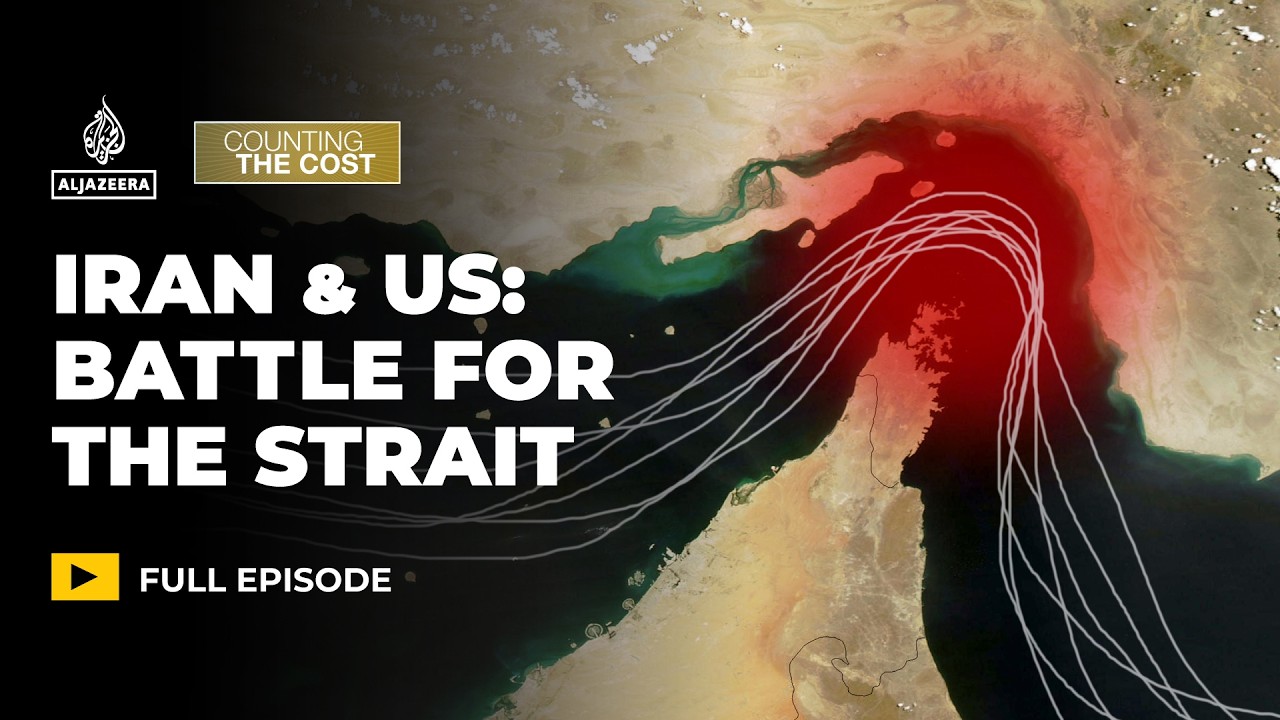
Discover how the US naval blockade, toll charges and geopolitical strategies in the Strait of Hormuz are reshaping global energy, shipping and gold markets.
In this episode of Al Jazeera English’s Counting the Cost, escalating tensions in the Strait of Hormuz have become front-page news as geopolitical maneuvering translates into tangible market impacts. Amid a US naval blockade on Iranian ports and Iran’s demands to impose toll charges in one of the world’s busiest shipping lanes, global energy prices, maritime law, and even the gold market are affected. In this article, we break down all key insights so you understand the implications on international trade, economic growth, and future global shipping dynamics.
How Is the Naval Blockade Reshaping the Strait of Hormuz?
In a dramatic twist that rocked global energy circles, the US imposed a naval blockade targeting Iranian ports, effectively halting the transit of vessels entering or leaving these areas. US President Donald Trump asserted that the blockade was a necessary response after negotiations with Iran collapsed. As one expert noted, "We did one only because they broke their word," highlighting how trust and diplomacy have eroded in the region.
This blockade is not a mere show of strength—it is a calculated move aimed at influencing how maritime traffic is controlled in the Strait, a choke point that impacts approximately 20% of global oil and gas supplies. By preventing ships from accessing Iranian ports, the US aims to pressure Iran, tying geopolitical risks directly to global trade flows. The maneuver has sparked fierce debates about not only the military efficacy of such blockades but also their legal standing under centuries-old principles of naval warfare.
With the US Navy now actively stopping vessels, the free navigation era is facing unprecedented pressure. The traditional understanding of international waters being accessible to all civilian traffic is being undermined, sending shockwaves through the global trading system. This ventilation of control over the Strait arrives as a stark reminder that maritime routes can be leveraged as political weapons, a reality that potentially signals a restructuring of long-held international norms.
What Are the Toll Charges and Their Far-Reaching Implications?
Adding complexity to the situation, Iran has introduced a policy to impose toll charges on ships transiting the Strait. Reports indicate that tolls could reach as high as $2 million per tanker—a price tag that not only challenges international shipping costs but also creates a platform for geopolitical leverage.
Iran’s rationale is clear: by controlling the passage through its territorial waters, it seeks to underscore its right to regulate the strait. However, this move has raised eyebrows. As one panelist explained, permitting such charges on an international strait could have significant economic costs, including higher prices passed on to consumers and risks of inflation. In practical terms, paying even $1 per barrel in toll fees might seem negligible relative to the overall oil price; however, if these tolls become a regular feature, they could fundamentally alter the cost structure of global maritime trade.
The payment dynamics are equally intriguing. There have already been reports of toll charges being paid in Chinese yuan, and there is speculation that future fees could be demanded in the Iranian rial. This diversification of payment methods underscores the broader geopolitical contestation over the dominance of the US dollar—signaling a long-term challenge that could ripple through international finance.
How Does International Maritime Law Frame This Conflict?
At the core of this unfolding crisis is the intersection of military strategy and international maritime law. The principle of freedom of navigation has long underpinned global shipping, ensuring that vessels from any nation can traverse international waters without undue interference. Under Article 87 of the UN Convention on the Law of the Sea, civilian vessels must not be impeded in international waters. Yet both the US and Iran, by their actions, appear to be bending or violating this principle.
In concerts with legal scholars, panelists on the show discussed how the US blockade and Iran’s imposition of tolls, while within the remit of naval warfare, step into legally murky territory. The US justifies its actions by citing principles of state security and the legitimacy of blockades during conflicts. Conversely, Iran’s actions are seen as an assertion of sovereign rights that could set a dangerous precedent. Notably, if Iran’s toll regime were to gain acceptance, it might inspire other nations—such as those controlling the South China Sea—to follow suit, reshaping long-standing principles that govern maritime trade.
This debate is further complicated by historical exceptions. For instance, the Suez and Panama Canals are man-made passages where tolls are standard practice, yet similar charges have not traditionally been levied on natural straits. As one expert clarified, the exceptions made for places like the Dardanelles or the Bosphorus in Turkey are narrowly defined. Such exceptions highlight that even nuanced interpretations of international maritime law hinge on long-established precedents which, if altered now, could transform global navigation rules.
What Is the Impact on Global Energy Markets?
The imposition of a blockade, coupled with Iran’s toll demands, has had direct consequences on global energy markets. Oil prices have responded dramatically, with Brent crude surging as market participants worry about supply shortages. The strategic importance of the Strait of Hormuz cannot be overstated. Given that roughly 20% of global oil shipments transit this narrow waterway, any disruption naturally triggers volatility.
President Trump’s statement that the blockade is a response to Iran’s failure to honor ceasefire negotiations fuels further uncertainty. This uncertainty is magnified by the fact that a significant portion of Iranian oil, approximately 1.5 million barrels per day, is exported to China—demonstrating the interconnectedness of global energy systems. As one expert noted, restricting Iranian oil could push global bidding pressure on alternate suppliers, further elevating prices.
While some believe that alternative pipelines and routes (such as those in Saudi Arabia and the UAE) might buffer the shock, the delay in rerouting oil shipments is likely to cause short-term price increases. The fact that US politicians have at times boasted of capabilities to open the strait with a powerful navy only underscores the unpredictable market dynamics at play. Whether these measures will result in sustained high energy prices or eventually force a recalibration of the global energy market remains a matter of intense debate.
How Are Gold Prices Reacting Amid the Crisis?
Interestingly, as geopolitical tensions rise in the Strait, the gold market has experienced a counterintuitive trend. Although gold is typically seen as a safe-haven asset in times of uncertainty, its price has recently experienced a modest slump. Panel experts explained that much of this behavior is attributable to prior market conditions—a bubble in gold prices had led to rapid escalations, and when risk-averse conditions set in, retail investors began pulling back.
Gold’s price behavior during the conflict reflects broader market psychology. The initial surge was spurred by investors seeking refuge from the deteriorating geopolitical landscape. However, subsequent corrections have sparked debates on whether the bubble is deflating or whether these are merely temporary adjustments. With uncertainty in multiple sectors—from energy prices to the potential retribution in global shipping—the fluctuating trends in gold prices serve as a barometer for the overall market anxiety.
It is important, however, to view these gold price changes within the broader context of economic pressures. Higher energy prices, increasing inflation, and concerns about supply chain disruptions can all lead to greater demand for safe-haven assets. But for now, the nuanced behavior of the gold market highlights an environment where investor sentiment is both volatile and unpredictable—a direct reflection of the high stakes involved in the Strait of Hormuz crisis.
What Does the Future Hold for Global Shipping?
The long-term ramifications of the current crisis remain uncertain. Experts on the show noted that the blockade, along with Iran’s toll regime, might not be a temporary episode but could very well set a precedent for global shipping practices in international waterways. One panelist warned, "We won't see a return to the status quo in terms of the Strait of Hormuz." This statement underscores the potential for reshaping the legal and operational landscape of not just one of the world’s critical trade routes, but of maritime navigation rules globally.
Iran’s insistence on controlling its territorial waters—and by extension the international strait—could encourage other nations to pursue similar strategies. In an era where geopolitical power struggles increasingly influence economic decisions, the possibility of other states emulating Iran’s toll regime poses serious risks to the principle of free navigation. Such shifts could fundamentally alter how maritime traffic is monitored and managed.
Moreover, the impact is not isolated to the immediate blockade area. If the practice of levying tolls on natural straits gains acceptance, it could trigger policy debates in other regions such as the South China Sea and the Strait of Malacca. The interconnected nature of global trade means that any alteration in the legal framework could leave long-lasting effects on shipping, energy prices, and international economic stability.
How Do Geopolitical Risks Intertwine With Market Dynamics?
At the heart of the Strait of Hormuz crisis is the interplay between geopolitical risks and market dynamics. The strategic impositions on shipping routes have a dual effect: they serve as a tool of statecraft while also influencing market economics. On one hand, imposing a naval blockade and demanding tolls signals political assertiveness; on the other, these actions contribute to rising costs and market uncertainty that ripple across industries.
The law of supply and demand comes into sharp focus here. As energy prices rise due to blocked shipments, consumers worldwide are bracing for higher gasoline costs—a development that could potentially slow down economic growth in several regions. Conversations on Al Jazeera English have underscored that while short-term cost increases may be bearable, the long-term imprint of these measures could reshape global trade patterns and even challenge the overwhelming dominance of the US dollar in international transactions.
In a noteworthy observation, an expert pointed out that even if tolls as modest as $1 per barrel are implemented, the increase might seem negligible per unit; however, when scaled against millions of barrels of oil, even a small percentage hike can result in significant overall cost increments. This reality further entwines the geopolitical maneuvers with everyday market prices, emphasizing that decisions made on the high seas have far-reaching consequences on terrestrial economies.
Are There Broader Economic Implications Beyond Energy and Shipping?
Beyond the immediate impacts on energy shipping and the gold market, the crisis at the Strait of Hormuz poses broader economic challenges. The ongoing uncertainty has knock-on effects that span across sectors, potentially inflating costs in insurance, rerouting logistics, and even in the pricing mechanisms for consumer goods. An increase in insurance premiums for vessels, due to the heightened risk of navigating potentially mined waters, is just one example of how intertwined these dynamics have become.
Moreover, the potential erosion of the US dollar's role as the prevalent global reserve currency is a point of intense discussion among market analysts. While current assessments suggest that the influence of US currency remains formidable—accounting for over 90% of cross-border transactions—the strategic maneuvers being played out in the Strait could inspire nations to reassess their reliance on the dollar. However, in the short term, the prevailing safe-haven status of the dollar, evidenced by its rise during the crisis announcement, continues to provide stability in a turbulent economic environment.
Policy makers and experts alike stress that, while these shifts may seem minor at present, the cumulative effect of such geopolitical risk factors could pave the way for a new era in global financial architecture. The ongoing debates on whether the dollar’s dominance is being fundamentally challenged or merely tested by temporary market pressures will continue to shape not only future trade agreements but also international monetary policies.
Conclusion: A Period of Uncertainty With Long-Term Implications
The current escalation in the Strait of Hormuz is far from a fleeting incident. With the US naval blockade and Iran’s aggressive toll demands, the global trading system faces a potential shift in established norms governing international navigation and economic stability. The interplay between geopolitical actions and market reactions—from surging oil prices and a volatile gold market to potential changes in shipping precedents—paints a picture of profound complexity.
For policymakers, business leaders, and investors, understanding these changes is crucial. As experts on Al Jazeera English stressed, the effects of these measures may reverberate long beyond the immediate crisis, affecting global energy flows, international law, and ultimately, the economic well-being of nations worldwide. The Strait of Hormuz is now at the crossroads of military strategy and market dynamics—a reminder that in today’s interconnected world, action in one region can send shockwaves far and wide.
Frequently Asked Questions
What impact does the US naval blockade in the Strait of Hormuz have on global trade? The US naval blockade disrupts the normal flow of vessels in and out of Iranian ports, affecting 20% of global oil and gas supplies. This move increases geopolitical risks and can trigger higher energy prices worldwide, as well as supply chain delays. The blockade not only challenges the traditional norms of free navigation but has long-term implications for global market stability.
Are the toll charges imposed by Iran legally acceptable under international maritime law? Under international maritime law, especially as established in the UNCLOS, civilian vessels in international waters should have the freedom of navigation. While some exceptions exist in man-made waterways, the imposition of heavy tolls in a natural international strait remains contentious. Legal experts argue that such charges could set dangerous precedents and violate the principle that states should not impede the free passage of civilian vessels.
How do fluctuations in oil and gold markets reflect the ongoing crisis in the Strait of Hormuz? The crisis has contributed to volatile oil prices as global supply concerns intensify due to the blockade. Oil prices have surged partly because of the risk of supply disruption. In contrast, gold prices initially surged as a safe-haven asset but later showed a slump due to market corrections and the bursting of a bubble. These fluctuations in both markets reflect the uncertainty and risk inherent in the conflict.
Could Iran’s toll regime weaken the US dollar’s global dominance? While Iran’s move to charge tolls in alternative currencies like Chinese yuan or eventually in the Iranian rial signals a desire to challenge the dollar’s hegemony in global trade, experts suggest that such measures alone are unlikely to immediately weaken the dollar’s dominance. The US dollar remains central, involved in over 90% of global transactions. However, sustained moves like these could fuel broader debates on monetary policy and encourage diversification over the long term.