Naval Power & Global Defense: Superpower Strategies
 Factverse Insights|World|18 min read|Mar 17, 2026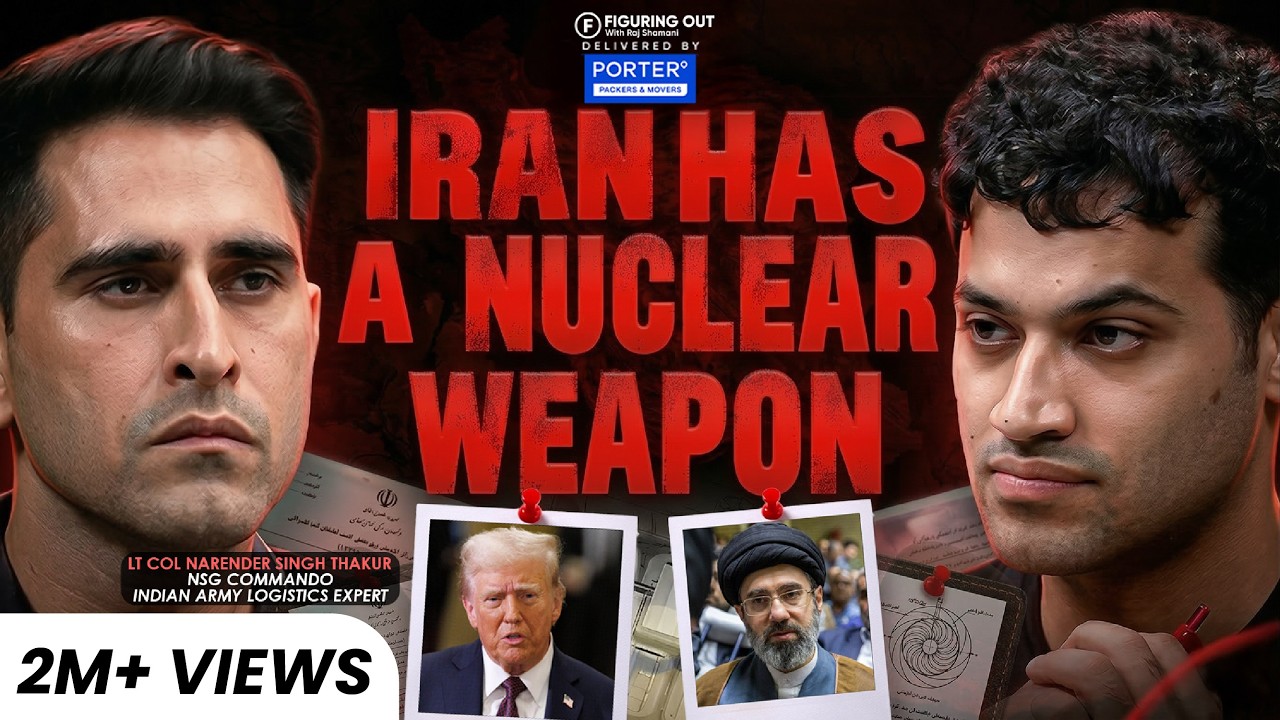
Explore how naval strike groups, aircraft carriers, and defense spending shape global strategic alliances and future warfare, as explained by Lt Col Narender.
Naval Power and Global Defense Dynamics: An In-Depth Look
In a riveting episode of The Invisible Nuclear Bomb - Strait of Hormuz & Global Economy | Lt Col Narender | FO484 Raj Shamani, Lt Col Narender delivers a deep analysis on the evolving nature of naval warfare and global defense. The discussion spans the formation of strike groups to complex geopolitical alliances, interweaving tactical breakdowns and strategic insights into how modern navies are structured for both power projection and defense.
This article examines the critical components of naval power, including the intricacies of aircraft carrier deployments, destroyer and frigate roles, and the overall defense dynamics that shape rivalries in the global arena. By exploring the defense procurement challenges and the significance of strategic alliances, Lt Col Narender provides a comprehensive overview that offers a clear picture of today’s naval capabilities.
The Anatomy of Naval Strike Groups
Strike Group Formation and Its Tactical Significance
According to Lt Col Narender, the construction of a modern naval strike group is not simply an aggregation of ships but a carefully coordinated system designed to assert dominance in strategic theaters. He explains that the aircraft carrier is the centerpiece upon which the group is built. The carrier is not just a floating airbase; it serves as a mobile command center capable of delivering a lethal array of fighter jets and missile systems.
"The aircraft carrier is essentially a movable base that carries 50 to 70 fighter jets and can project airpower at an unprecedented range," he noted.
This emphasis on mobility is crucial in modern warfare: by moving the carrier closer to areas of interest, it minimizes the need for midair refueling and ensures that combat aircraft can engage targets more efficiently. The aircraft carrier, accompanied by its escort ships such as destroyers, frigates, and submarines, forms a layered defense that is nearly impenetrable.
Components of a Strike Group
Lt Col Narender deconstructs the strike group segment by segment:
Aircraft Carrier: The primary asset, offering a platform for 50-70 combat aircraft. With a nuclear-powered system, modern carriers like the USS Gerald R. Ford can operate for long durations without the need for refueling, greatly extending operational reach.
Destroyers: These vessels are tasked with providing advanced air defense and anti-submarine warfare capabilities. Equipped with guided missile systems and radar arrays, destroyers serve as the first line of protection for the carrier. They intercept incoming threats such as cruise missiles and hostile aircraft.
Frigates and Submarines: Operating as both offensive and defensive assets, frigates patrol the periphery of the strike group, while submarines engage in covert operations. Their roles include offensive strikes against enemy vessels and safeguarding key naval routes.
Refueling and Support Ships: Although modern carriers have overcome many logistical limitations through nuclear propulsion, accompanying support vessels are essential for maintaining long-term operations, offering munitions, supplies, and technical support.
The intricacy of coordinating such a diverse fleet requires robust interoperability and real-time situational awareness, aspects that modern navies invest heavily in through technological advancements and integrated communications systems.
Aircraft Carrier Deployments and their Strategic Value
Power Projection in Naval Warfare
The deployment of aircraft carriers represents the apex of maritime power. Lt Col Narender points out that carriers command global attention not only due to their immense cost but also because of the unparalleled power projection they offer. With a carrier on station, a nation can swiftly deploy air assets anywhere in the world, asserting both military and political will.
In this episode, he elaborated:
"Every aircraft carrier is an asset of billions of dollars and a symbol of supreme naval capability. Their strategic presence in designated regions almost guarantees operational freedom."
The United States, with its fleet of carriers, leverages these assets to maintain dominance in the Pacific, Atlantic, and other strategic maritime regions. Carriers are central to the American ability to respond to emerging threats and maintain a credible deterrence against adversaries.
Innovations Shaping Carrier Operations
Modern carriers are evolving rapidly, transitioning to nuclear power and advanced digital systems. This evolution not only enhances endurance but also reduces vulnerabilities related to logistics and conventional fuel shortages. Lt Col Narender explains that nuclear-powered carriers operate continually, underpinning the doctrine of sustained maritime operations.
Additionally, carriers now integrate with unmanned aerial vehicles (UAVs) and advanced sensor arrays. This technological leap allows for extended range and greater precision in targeting enemy assets. The integration of advanced missile defense systems on escort ships further complements the carrier, creating an impenetrable defense web.
The Role of Destroyers and Submarines
Shield and Sword of the Fleet
Underlying the robustness of a carrier strike group is an arsenal of destroyers and submarines. As discussed in the episode, destroyers are equipped with state-of-the-art air defense systems, such as guided missile platforms, that provide a protective shield for the fleet. Their capacity to counter both aerial threats and submarine incursions makes them indispensable.
"Destroyers are the unsung heroes of the naval fleet, dedicated to protecting the carrier from every possible threat, be it from the air or underwater," Lt Col Narender emphasized.
In addition to air defense, destroyers typically serve an anti-submarine warfare (ASW) role. Their sonar systems, combined with torpedo and missile capabilities, allow them to detect and neutralize hostile submarines before they can disrupt the group’s operations.
Offensive and Defensive Submarine Operations
Submarines add a covert offensive dimension. They are tasked with attacking enemy warships indirectly, gathering intelligence, and even launching ballistic missiles if required. The stealth attributes of submarines allow them to position themselves undetected, making them a potent deterrent against any adversarial maneuvers.
Lt Col Narender described the tactical employment of attack submarines:
"Their presence ensures that enemy forces cannot concentrate on a single point of weakness, creating a chess-like dynamic where every move is countered."
This layered defense strategy, combining visible high-value assets like aircraft carriers with stealthy yet deadly submarines, forms the backbone of modern naval combat systems.
Global Defense Spending and Strategic Alliances
A Global Arms Race in the Naval Sphere
The conversation in the episode also sheds light on the macroeconomic and geopolitical imperatives driving naval procurement. Modern naval assets are extremely expensive, and sustaining a global fleet demands substantial defense spending. Lt Col Narender remarked on the financial burdens and the necessity for technological supremacy:
"When you talk about naval power, you are also discussing billions of dollars that are spent every day in maintaining these assets. The costs involved necessitate not only domestic investment but also strategic alliances and arms procurement partnerships."
This investment allows countries like the United States to maintain a technological edge, ensuring that their naval fleets are capable of responding to any scenario. However, emerging powers like China are rapidly increasing their naval assets, creating a competitive dynamic in which quantity sometimes challenges quality.
The Role of Strategic Alliances
Strategic alliances play a crucial part in global defense. The United States, for instance, leverages its network of alliances to secure access to key maritime chokepoints and bases around the world. Lt Col Narender highlights the significance of these partnerships:
"These alliances are not just based on shared security interests but also on economic dependencies. They enable superpowers to project their influence across regions, creating a string of strategic bases that encircle potential adversaries."
For example, alliances in regions such as the Pacific, the Middle East, and even the strategic waters around India contribute to a coordinated effort against common threats. The ability to secure ports, refueling bases, and logistic hubs is central to maintaining operational readiness.
Navigating Defense Procurement Complexities
Defense procurement is not just a matter of securing the latest technology; it involves intricate negotiations, intergovernmental partnerships, and domestic industry debates. The episode discussed scenarios where countries like India have had to balance self-reliance with borrowing technology from established powers such as France, Russia, or even the United States.
In one striking observation, Lt Col Narender noted:
"India’s challenge isn’t just about acquiring aircraft or ships—it’s about establishing a robust ecosystem where defense systems can be maintained, upgraded, and used independently."
This quest for autonomy is part of a broader global trend where nations are becoming more cautious about relying exclusively on external defense supplies. The protracted nature of defense procurement—years of R&D, testing, and eventual production—demands a delicate balance between innovation, cost, and strategic imperatives.
Geopolitical Implications of Naval Dominance
The U.S. vs. China Naval Competition
A recurring theme in the episode was the tense global rivalry between the United States and China. While the U.S. projects power through superior carrier strike groups and unrivaled logistical networks, China counters by amassing considerable naval assets. However, Lt Col Narender contends that China’s focus on quantity over flexibility has inherent limitations.
"China has a large number of naval assets, but they are all concentrated in one area. Unlike the U.S., which can deploy its carriers from strategic bases around the world, China’s options are limited by geography," he explained.
China’s struggle to gain maritime dominance is further complicated by regional challenges. With Taiwan acting as a strategic barrier, the People’s Liberation Army (PLA) faces significant constraints in approaching the open seas. This geopolitical puzzle ensures that even if China wins on land, its ability to challenge American naval supremacy remains in question.
Regional Hotspots and Potential Flashpoints
The discussion also touched on several regional hotspots where naval power is a decisive factor. The Strait of Hormuz, for example, remains a critical juncture. With vast oil reserves and strategic shipping lanes, control over these waters is not just about blocking enemy transport but also about leveraging economic power. Lt Col Narender referenced Iran’s capability to disrupt global oil flows as a tool to create geopolitical leverage.
In another part of the conversation, he compared the operational capabilities:
"While China’s influence is growing in many regions, countries like Iran and even India have managed to develop defensive frameworks that can significantly challenge an adversary’s operational plans if provoked."
This interplay between localized defense measures and global power projection creates an evolving landscape where alliances constantly shift. It raises questions about who will emerge as the leader in the next era of global naval dominance.
High-Tech Weaponry and Future Naval Warfare
Advancements in Missile Technology
A key element of modern naval strategy is the incorporation of high-tech weaponry. Lt Col Narender points out that today’s navies are not only about massive ships and aircraft; they rely heavily on precision-guided missiles and advanced radar systems.
For instance, interceptors and anti-ship missiles have revolutionized the way naval combat is conducted. Modern destroyers can launch missiles that have the dual capability of both attack and interception. This dual-functionality ensures that admiralty remains flexible in defense and offense.
"Missile technology is evolving at a breakneck pace. The same platform that defends an aircraft carrier can often double as an offensive weapon against enemy fleets," he remarked.
The Integration of Digital Systems and AI
Emerging technologies, including artificial intelligence (AI) and machine learning, are increasingly being integrated into naval defense systems. Autonomous drones, enhanced sensor networks, and real-time tactical analysis are all aspects shaping the future of naval combat. These systems not only improve reaction times but also enable the more efficient management of complex wartime scenarios.
The episode discussed how these advancements contribute to creating a battlefield where human decision-making is augmented by digital precision. For countries with significant defense budgets like the U.S., this means further investment in cutting-edge technology, which in turn reinforces their global military superiority.
Economic Factors and Defense Budgets
The Financial Toll of Naval Capital
Naval power is synonymous with enormous financial outlay. Throughout the episode, Lt Col Narender stressed that maintaining a modern navy requires consistent, high-level spending. The operational costs of maintaining nuclear-powered aircraft carriers and supporting fleets run into tens of billions of dollars annually. In many ways, defense expenditures are as much about economic might as they are about military capability.
He noted, "An aircraft carrier alone can cost billions, and then you have the never-ending maintenance and operational expenses. That’s why only a few nations can sustain such a force for extended periods."
The discussion also highlighted how these economic realities push nations to form strategic arms partnerships to mitigate costs. Strategic alliances, wherein countries share technology, logistical bases, and even intelligence, can significantly reduce the economic burden on any single nation.
Balancing National Interests
As nations debate their defense strategies, balancing between national sovereignty and multilateral cooperation becomes critical. India, for example, is pursuing indigenous development of its naval capabilities while still relying on technology transfers from established powers. This dual approach is reflective of the global trend where emerging militaries seek both economic independence and strategic alliances.
The conversation elaborated:
"For India, it’s not just about buying aircraft or ships from abroad; it’s about building an ecosystem that can support and upgrade these assets independently."
This strategy ensures that while national pride and sovereignty are maintained, the country also remains part of a larger, interdependent defense network.
Strategic Autonomy Versus Global Alliances
The Imperative of Strategic Autonomy
One of the most compelling insights from the episode was the emphasis on strategic autonomy. Rather than being merely neutral, nations like India are taking a path that balances global alliances with independent decision-making. This approach allows them to leverage relationships with major powers without becoming entirely dependent on any single region or doctrine.
"Strategic autonomy means having a mind of your own—making decisions purely based on national interests rather than external dictates," Lt Col Narender stated.
This perspective is particularly critical in today’s multipolar world, where global alliances are fluid. The ability to navigate between partnerships and self-reliance is emerging as a key determinant of long-term security and regional influence.
Global Defense Ecosystems and the Missing Links
An intriguing part of the conversation revolved around what Lt Col Narender described as the "missing link" in modern defense ecosystems. While many nations can purchase advanced defense systems, there are inherent challenges in integration, maintenance, and supply chain continuity. In some cases, superpowers face logistical bottlenecks and issues with technology transfer—problems that add risk during critical operations.
He explained, "When a country’s defense assets become too dependent on imported technology, it not only exposes a vulnerability but also undermines the ability to sustain operations if the supply chain is disrupted."
This discussion underscores the necessity of establishing independent production and maintenance capabilities—a long-term objective for many nations looking to break free from the constant cycle of dependency.
Global Power Play and the Geopolitical Landscape
The Chessboard of Naval Dominance
Naval power is a key element in the global chessboard where strategic decisions are often a matter of life and death. The episode paints a vivid picture of how nations project power, secure key maritime routes, and engage in psychological warfare by merely positioning formidable fleets in international waters.
For example, the sovereignty over international waters such as the Strait of Hormuz and the Malacca Strait is critical for global trade and energy security. The control of these regions can effectively shape global economics and political alliances. Lt Col Narender highlighted that while the U.S. can quickly reposition its carrier groups anywhere in the world, other nations like China must contend with geographic limitations which dictate their strategies.
"Geography is a double-edged sword. For the U.S., distance is an advantage. For China, it becomes a constraint that limits operational flexibility," he asserted.
This dynamic creates an environment where geopolitical strategy is as much about where naval assets are deployed as it is about the technology behind them.
Defense as a Multifaceted Tool
Naval power, and by extension defense systems, are now part of a larger narrative that includes financial warfare, narrative shaping through media, and the pursuit of technological supremacy. The episode vividly captures how each tool—from conventional weaponry to advanced cryptographic transactions—serves a purpose in the grand strategy of national defense. The proliferation of crypto-based transactions and feared supply chain disruptions are just some of the modern trends influencing defense economics.
Moreover, the defense industry is evolving to meet these new challenges. Countries are not just buying weapons—they are also investing in the domestic ability to manufacture and upgrade these systems, creating a robust feedback loop that reinforces self-reliance while staying competitive in the global market.
Lessons and Conclusions
The Future of Naval Conflict
The comprehensive discussion by Lt Col Narender leaves little doubt that naval power remains a pivotal element of global strategic policy. From aircraft carriers to advanced interceptor missiles, the evolution of naval technologies and defense spending patterns will continue to shape international alliances for decades to come. The integration of AI and digital warfare systems promises to further revolutionize naval combat, making it faster, more unpredictable, and increasingly lethal.
Key Takeaways
Several critical insights emerged from the episode:
Aircraft Carriers as Strategic Powerhouses: Modern carriers, especially nuclear-powered ones, are at the heart of a strike group. Their ability to carry a fleet of fighter jets and operate with minimal logistical constraints gives them unmatched operational longevity.
Layered Defense with Destroyers and Submarines: The complementary roles of destroyers (for air and missile defense) and submarines (for stealth operations) ensure that a naval force can both project power and defend itself against a wide range of threats.
Economic and Geopolitical Imperatives: The staggering costs of advanced naval assets compel nations to form strategic alliances and invest in domestic defense industries, balancing between self-reliance and globalization.
Strategic Autonomy: Countries like India are learning to navigate global defense politics by maintaining strategic autonomy. This approach allows them to decide their own interests rather than being entirely dictated by major powers.
Future Technologies and Digital Integration: The incorporation of AI, enhanced sensor systems, and digital warfare capabilities signals a paradigm shift in naval warfare that demands constant innovation and adaptation.
"Even if challenges arise on one front, modern navies are structured to ensure that no single threat can cripple the entire defense apparatus," Lt Col Narender concluded.
Concluding Thoughts
The future of global defense is intertwined with the evolution of naval power. As nations continue to invest in massive capital assets like aircraft carriers, destroyers, and state-of-the-art weapons, the dynamics of power are shifting. The U.S., China, and emerging powers like India are recalibrating their strategies, powered by innovation and strategic foresight.
In the context of modern warfare, control of the seas is not just about aggressive expansion—it is also about safeguarding national interests, maintaining economic stability, and ensuring that the balance of power remains in favor of those who can invest in next-generation defense capabilities.
This episode offers a masterclass in understanding how navies operate as both a military tool and a component of global politics. It underscores how defense spending is intricately connected to geopolitical narratives, and it illustrates that future conflicts may well be defined by the strength and ingenuity of those maritime forces.
For anyone interested in how naval power continues to shape international relations and defense dynamics, Lt Col Narender’s insights provide both clarity and foresight. The narrative is a call for nations to innovate continually, invest wisely, and form strategic partnerships that reflect a world where sovereignty, technology, and mutual interests converge to define global order.
Final Reflections
As the strategic landscape evolves, one fact remains constant: the sea is the ultimate battleground for global influence. From the corridors of Washington’s defense budget offices to the shipyards in emerging economies, the drive to build and maintain formidable naval forces is a testament to the enduring significance of maritime supremacy.
For policy makers, military strategists, and defense enthusiasts alike, this deep dive into naval power and global defense dynamics is a reminder that the future of warfare is as much about innovation and economic foresight as it is about traditional combat. Understanding these dynamics is key to preparing for a future where the ability to control the sea determines not just military victory, but global power itself.
Conclusion
In his detailed discussion, Lt Col Narender made it clear that naval power remains at the heart of global defense dynamics. From colossal aircraft carriers and their agile, multi-layered escort ships to the economic and technological challenges of maintaining a world-class navy, every element interlocks to form a formidable defense mechanism. With global power balances shifting and emerging technologies redefining warfare, the evolution of naval power will continue to be a critical factor in both deterring conflict and projecting influence worldwide.
By understanding these intricate strategies and appreciating the massive financial and strategic investments involved, nations and observers alike can gain a clearer picture of the future of global defense. The sea, with its timeless mysteries and strategic value, remains a stage where modern superpowers assert their dominance, and the future of international security will be decided on these vast, unpredictable waters.
This episode is a must-watch for anyone intent on unraveling the complexities of modern defense dynamics—a narrative where every ship, every missile, and every strategic decision plays a decisive role in shaping tomorrow's world.