Iran War, PM Modi, Kerala Elections & More: Shashi Tharoor's Most Extensive Interview
 Factverse Insights|Politics|12 min read|Mar 16, 2026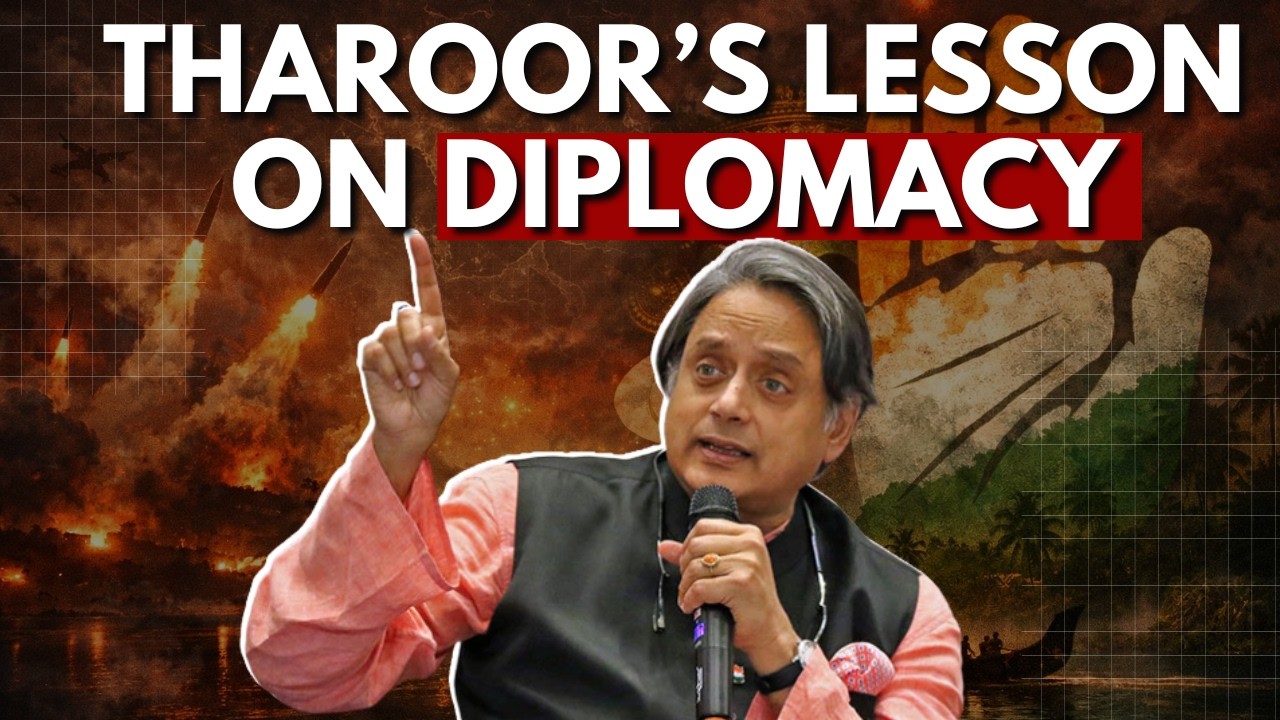
Dr. Shashi Tharoor shares his transformative vision for Kerala’s political reforms and balanced foreign policy—a fresh blueprint for domestic progress and global engagement.
Kerala Politics and Global Diplomacy: A Comprehensive Discussion
In a compelling episode of On Iran War, PM Modi, Kerala Elections & More: Shashi Tharoor's Most Extensive Interview, Dr. Shashi Tharoor outlines a visionary approach that weaves together Kerala’s political transformation and a robust interpretation of India’s foreign policy. The discussion illuminated not only his commitment to a progressive and globally integrated Kerala but also emphasized the necessity of bipartisan collaboration and a balanced stance on international issues.
With decades of political experience and an international background, Tharoor has emerged as a unique voice in Kerala politics. His candid assessment is delivered with a mix of personal anecdotes, historical references, and a clear blueprint for the future. In this article, we explore the key insights from this segment, covering topics from electoral strategies in Kerala to the subtleties of global diplomacy, with emphasis on his proposals for modernizing the state’s economy and ensuring that foreign policy always reflects national interests.
Kerala’s Political Vision: A New Dawn for a Global State
Revitalizing Kerala’s Legacy of Pluralism
Tharoor began by reminding viewers of Kerala’s rich history of global connections dating back 3,000 years. He highlighted how the state, known for its welcoming spirit, has long been connected to the Arab world, the Judeo-Christian tradition, and even ancient historical exchanges. He pointed out that the influence of migration and trade is more than just a relic of the past; it is a guiding light for a future that is open and globally integrated.
"Kerala has been open to the rest of the world for centuries. It’s not just about Gulf migration, but about a continuous tradition of global engagement," Tharoor remarked. This message resonates deeply given the current polarization seen in many parts of the country. His vision encourages the people of Kerala to learn from international examples—whether it is the streamlined governance of Estonia or the innovative policies practiced in the Netherlands—rather than comparing themselves to neighboring states solely on industrial might.
A Blueprint for Economic Revitalization
Recognizing the need for economic reform, Tharoor articulated a robust strategy designed to rescue Kerala’s economy from the clutches of bureaucratic stagnation and rigid political bargaining. He proposed measures such as an investor protection act aimed at making Kerala a haven for private sector investment. According to him, red flags raised by past governance have dissuaded entrepreneurs, and the state must now be repositioned as a safe environment for business.
"Too many business people have been scared away by the red flags of the left. We need to make sure that if businesses come to Kerala, their investments are secure from bureaucratic and political hassles," he explained. Tharoor’s proposal to integrate cutting-edge technologies such as biotechnology offers a unique blend of tradition and modernity—a move that can reshape the state’s industrial landscape and foster a new era of economic prosperity.
Revamping Healthcare and Education
Tharoor’s vision for Kerala extends beyond just attracting investment; it also emphasizes the importance of addressing demographic challenges and leveraging existing strengths. He envisions Kerala as the future healthcare capital of India, capitalizing on its already acclaimed healthcare system.
One of his innovative ideas includes positioning Kerala at the forefront of gerontocratic research and wellness, thereby tapping into the potential of an aging population. He proposed the creation of retirement villages and highland retreats that could not only cater to locals but also attract candidates from across India. In parallel, Tharoor stressed the need to overhaul the higher education system. By providing world-class, flexible education that aligns with marketplace needs, Kerala can retain talent and reverse the trend of migration of its brightest minds.
Campaign Strategy and Party Dynamics
As co-chair of the campaign committee, Tharoor detailed his role in ensuring that the political campaign is not just about anti-incumbency but about presenting a positive message of change. Emphasizing the importance of unity within his party, he argued that dissent – when handled with mutual respect – is a sign of a vibrant democracy.
"One man's factionalism is another man's vibrant democracy," he noted, underscoring that the plurality of views in his party is essential for genuine discussion and progress. Tharoor described his active participation in numerous public events across Kerala, citing his previous engagements in over 56 constituencies during a three-week campaign as evidence of his commitment. His insistence on bringing together diverse voices within the party, including the urban middle class and professional circles, reflects his broader national strategy to harness the power of a united, forward-looking electorate.
Critique of Communal Politics
A recurring theme in Tharoor’s commentary is his critique of communal politics. He stressed that Kerala’s historical legacy of interfaith harmony is its greatest asset. As he recalled the celebratory nature of various religious festivals and the mutual respect shared between different communities, Tharoor argued that political strategies steeped in communal bigotry have no place in a modern, pluralistic society.
By contrasting Kerala’s inclusive legacy with the communal instincts seen in some national parties, he indirectly critiqued political opponents who fail to embrace the state's diverse cultural ethos. His vision is one where policies are guided by inclusivity, social justice, and a forward-thinking approach rather than age-old antagonisms or sectarian divides.
Global Diplomacy and Foreign Policy: Balancing National Interests
A Pragmatic Approach to International Conflict
The conversation seamlessly transitioned to the sphere of global diplomacy, where Tharoor’s reflections on foreign policy underscored his commitment to transcending partisan divides. Tharoor maintains that India’s foreign policy should be a reflection of its national interests, irrespective of which party is in power. He was particularly vocal in his critique of the recent Middle Eastern war, questioning the rationale behind preemptive self-defense measures that breached international law and the UN Charter.
"You cannot attack in an unprovoked way. The argument for preemptive self-defense is specious when the facts do not support it," Tharoor said. He scrutinized the narrative that had justified aggressive actions while pointing out the longstanding diplomatic ties that India has maintained with states like Iran—a relationship marked by both historical depth and mutual geopolitical interests (including significant energy security concerns).
The Intricacies of Global Diplomacy
Drawing from his extensive experience in international organizations and his tenure as the chairman of the foreign affairs committee of Parliament, Tharoor discussed the need for measured responses in foreign policy. He was critical of hasty decisions that are designed to generate short-term applause rather than long-term strategic advantages.
One of the most thought-provoking points of his discourse was his call for self-restraint on issues where national interests are at stake. He observed, "When the costs are high, the political benefits must be weighed maturely. We need to exercise self-restraint rather than grandstanding in the international arena." This calm, analytical outlook is contrasted sharply with the unpredictable nature of some world leaders, especially in the context of the shifting policies of key global players like the United States.
Reflections on Bipartisanship in International Relations
Tharoor also reminisced about a time when politics was characterized by a sense of camaraderie across party lines. Referencing a past era when Congress ministers and leaders from opposition parties would share meals and discuss pressing issues in private settings, he lamented the current state of division within Indian politics.
"Politics is about creating a better India. It is not simply about personal ambition or advancing the interests of a particular community. We must speak with respect and trust the basic good faith of all parties involved," he stated. This emphasis on bipartisanship in foreign policy is particularly resonant in light of recent events. Even as internal political dynamics grow more polarizing, Tharoor’s reminder that diplomacy must be rooted in a national interest that transcends party boundaries remains timely and important.
Balancing Domestic Signals with International Responsibilities
One of the more nuanced parts of Tharoor’s foreign policy analysis was his discussion on how domestic politics influences international stances. He observed that each foreign policy decision can carry a domestic narrative that appeals to various sensitivities among the electorate. This means that while leaders might adopt certain positions to satisfy political bases at home, they must also carefully consider the broader repercussions of their actions abroad.
He explained, "Many foreign policy stances have a domestic message. When the costs are higher, we must balance the temporary gratification of speaking our mind against the long-term needs of our people and country." This sentiment encapsulates his overarching belief that India’s strategic decisions must prioritize national security, energy security, and the well-being of its significant diaspora, especially in critical regions like the Gulf where millions of Indians reside.
Comparing Global Diplomatic Styles
Turning to a comparative evaluation of global leadership styles, Tharoor offered a pointed critique of what he described as the unpredictability seen in current global politics. Reflecting on the tenure of former U.S. President Donald Trump, he commented on the malleable nature of American diplomacy in times of conflict.
"He has been completely unpredictable—contradictory one day, then shifting his goals the next. There has never been a world leader like him, and the conduct of diplomacy through tweets is something entirely new," Tharoor remarked. His words serve not only as a critique but also highlight the challenges faced by global leaders and nations that are trying to manage relationships with countries that deploy unconventional methods on the international stage.
A Call for Consistent National Interests
Reflecting on the broader picture, Tharoor reiterated a principle that he has championed over the years: Indian foreign policy must always serve the national interest. His stance is simple yet firm—no matter the prevailing political winds or the pressure to align with international opinion, India’s primary focus should remain on securing energy resources, protecting its citizens abroad, and fostering alliances that enhance national prosperity.
"There is no such thing as a Congress foreign policy or a BJP foreign policy. There is only Indian foreign policy and the protection of our national interests," he stated emphatically. With this perspective, Tharoor positions himself not as a partisan critic but as a committed guardian of the country’s core values and strategic priorities. This approach aims to bridge the gap between domestic political discourse and the often complex global stage on which India plays a prominent role.
Conclusion: A Vision Anchored in Tradition and Progress
Dr. Shashi Tharoor’s extensive discussion on Kerala’s political future and India’s role on the global stage offers a refreshing reminder that governance must be both visionary and pragmatic. His belief in the power of pluralism and global connectivity serves as a call-to-action for both Kerala and India at large. From advocating for economic reforms that safeguard investments and modernize healthcare to championing a foreign policy built on mature dialogue and historical continuity, Tharoor’s insights provide a roadmap for progress.
In his own words, the transformation of Kerala into a welcoming state that harnesses technology and education is not merely a campaign promise, but a blueprint for reinventing regional identity. Combined with the need for a disciplined yet flexible foreign policy, his message resonates well beyond the boundaries of electoral politics. It is a holistic vision that ties together the domestic aspirations for a rejuvenated Kerala with India’s larger global responsibilities.
This episode of NDTV Profit reveals that the future of politics in Kerala—and perhaps that of India as a whole—needs to be grounded in the values of inclusivity, a commitment to innovation, and the relentless pursuit of national interest. Tharoor’s call for bipartisanship, both at home and on the international stage, underscores that true leadership lies in transcending party lines in favor of progress and development.
Whether you are a political pundit, a policy enthusiast, or simply a citizen interested in the future of Kerala and India, Tharoor’s candid exposition is a must-watch. His articulate blending of historical insights with contemporary challenges provides valuable lessons on how a state with such a rich past can pave the way for a prosperous, unified future.
As Kerala gears up for critical electoral contests and debates about its economic and social trajectory, this conversation serves as an important reminder: progress requires not only a rethinking of past models but also a determined embrace of modernity and global cooperation. With leaders like Tharoor articulating bold visions, the state’s future appears poised for transformation—a Kerala that is both deeply rooted in its cultural heritage and ready to lead in the global arena.
Ultimately, the discussion reinforces one vital point: the strength of any democracy lies in its ability to blend the wisdom of its history with the innovations needed for tomorrow. Tharoor’s multifaceted approach to both state politics and global diplomacy is a testament to that principle, ensuring that the pursuit of progress remains holistic and inclusive.
In this episode, Dr. Tharoor not only celebrated his personal milestones but also reminded us that the journey towards national progress is continuous and collective. As Kerala navigates its political path and India redefines its foreign policy, his insights serve as a beacon for a balanced, visionary approach to governance.
Final Thoughts
The vision put forth by Tharoor challenges the status quo on two fronts: at the state level by reimagining Kerala as a globally attuned and investor-friendly hub, and on the international stage by urging measured, interest-based diplomacy. His emphasis on maintaining civil discourse across party lines while ensuring that economic growth, healthcare innovation, and educational excellence remain top priorities is a refreshing departure from today's hyper-partisan politics.
In summation, Tharoor’s reflections offer a multifaceted blueprint that could well redefine how Kerala and India engage with both domestic challenges and global opportunities. His call for unity, coupled with a rigorous adherence to national interest in foreign policy, sets the stage for a new era of progressive governance—one grounded in history, yet boldly facing the challenges of tomorrow.
Whether you're a dedicated follower of Kerala’s political developments or keenly interested in the evolution of India’s strategic posture, this conversation provides a rich, engaging narrative of vision, reform, and the enduring importance of unity in progress.