Iran’s Bold Stand: 21-Hour Talks Expose U.S. Demands
 Factverse Insights|Politics|14 min read|Apr 12, 2026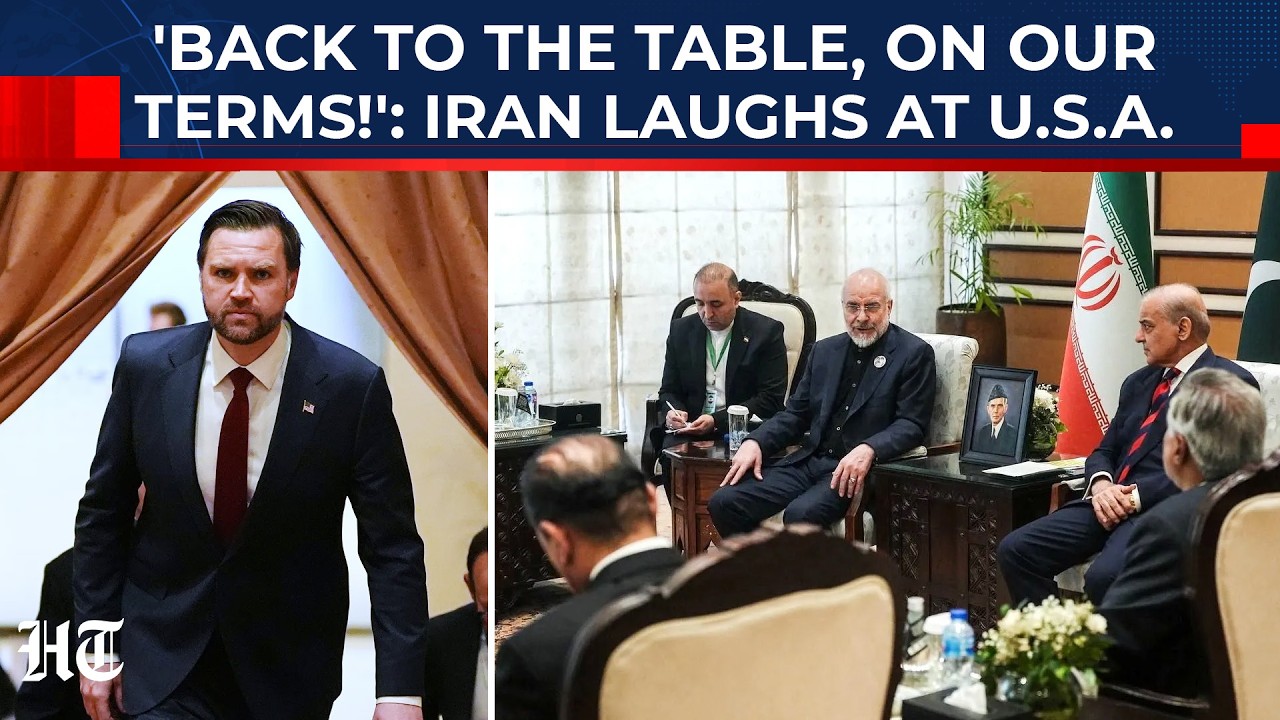
Explore the fallout from a grueling 21-hour Iran-US negotiation, where Iran slammed excessive U.S. demands and revealed a strategic diplomatic deadlock.
'Back To The Table, On Our Terms!': Iran Laughs At USA After Vance Embarrasses Trump During Talks
In a dramatic session of high-stakes diplomacy, 21 hours of negotiations in Islamabad came to an abrupt halt as Iranian officials accused the U.S. of imposing unreasonable demands. This article provides an in-depth analysis of the events, capturing the key insights from the discussion, the role of each party, and what this deadlock implies for future diplomatic talks.
What Happened During the 21-Hour Negotiations?
The lengthy discussions between Iran and the United States unfolded in Islamabad, lasting an exhaustive 21 hours with no breakthrough in sight. According to Iranian state broadcasters, the negotiations failed primarily because of what they termed as "excessive demands" by the American side. Iranian media outlets, including Press TV and IRIB, were unfiltered in their criticism, arguing that U.S. rigidity made it impossible to craft a workable framework, especially given the contentious issues on the table.
Iran’s stance was clear: while their delegation undertook continuous and intensive talks to protect national interests, they were repeatedly stymied by the U.S. insistence on long-held red lines. As one Iranian representative stated, "The unreasonable demands of the American side prevented the progress of the negotiations." These comments suggest that the failure was less about Iran’s unwillingness to negotiate and more about the U.S. not being flexible enough to reach a compromise.
The debates touched on various pivotal issues, including the status of the Strait of Hormuz—a vital waterway strategically important to both nations—and questions regarding Iran’s nuclear rights. The U.S. delegation insisted on obtaining firm commitments from Iran to prevent its nuclear program from advancing to a weaponized level. However, Iran’s response was to suggest that their new initiatives and diplomatic proposals were repeatedly sidelined by American intransigence.
How Did Iran Criticize U.S. Demands?
Throughout the marathon of discussions, Iranian media seized on the narrative that the U.S. was trying to achieve in negotiations what it had failed to secure through military might. A prominent Iranian embassy account went as far as mocking the American position by portraying it as a desperate or “crawling” attempt to return to the negotiating table after military setbacks. This candid critique highlights Iran’s intention to flip the script on the U.S. narrative by emphasizing that military pressure—and indeed the failure to manage it—had already underscored Washington’s weak hand.
Iran’s media was particularly vocal in emphasizing the synergy between their strategic geographic advantages and diplomatic resolve. In one statement, Iran’s Press TV noted that despite the intensive 21-hour dialogue, the U.S. demands remained an obstacle, ultimately stalling progress. Iranian commentators underscored that unless Washington adjusted its expectations and adopted a more realistic approach, the negotiating table would continue to be an arena of deadlock. The message was unequivocal: Iran is prepared to defend its interests, even if it means leveraging its control over key areas like the Strait of Hormuz.
The significance of the Strait of Hormuz cannot be overstated. As reported by Iran’s Taznim agency, this strategic chokepoint would remain off-limits for any easing of U.S. pressure unless America was willing to accept what is considered a 'reasonable deal' by Iran. This tie between the waterway and the negotiation terms serves as a vivid reminder that every concession Iran makes on diplomatic fronts is closely tied to its overarching strategic defense policy.
What Did U.S. Officials Say About the Talks?
While Iranian officials were quick to criticize U.S. inflexibility, American negotiators offered their own narratives about the session. U.S. Vice President JD Vance, representing the Trump administration, was notably blunt in his debrief, describing the outcome as a significant setback for Iran. Vance claimed that while the U.S. had clearly stated its red lines and the terms under which concessions might be possible, Iran’s refusal to accept these terms left Washington with no option but to walk away from the negotiations.
Vance explained on stage, "We’ve made very clear what our red lines are, what things we're willing to accommodate and what things we're not. They have chosen not to accept our terms." This candid admission underscored Washington’s frustration with what it perceived as an intransigent Iranian approach. The U.S. delegation viewed the failure as a demonstration of Iran’s unwillingness to make the necessary compromises, despite the intensive and lengthy discussions.
Beyond the specific language used, American representatives argued that the negotiations were part of a broader strategy where dialogue was used as a means to gain achievements that could not be secured by force. A source cited by FAR news agency even summed up the U.S. perspective by asserting that Washington was attempting to gain through diplomacy what had been unachievable on the battlefield. This narrative not only reflects on the fallout of the talks but also points to the underlying tension between military and diplomatic strategies in U.S. foreign policy.
Former U.S. State Department Middle East negotiator Aaron David Miller also weighed in during the session, suggesting that Iran holds a strategic advantage in these negotiations. Miller stated, "They are clearly in no hurry to make concessions. It seems to me they still have the highly enriched uranium. They've demonstrated they've weaponized geography. They control and now manage the Strait of Hormuz." By highlighting these points, Miller argued that Iran not only remained steadfast but also enhanced its bargaining power vis-à-vis the U.S., leaving the latter in a comparatively weakened position.
What Are the Strategic Implications of the Deadlock?
The collapse of these 21-hour talks carries far-reaching implications for both regional geopolitics and global diplomatic strategies. For Iran, the outcome serves as a loud and clear message: they are prepared to use every available tool, from control of critical waterways to strategic communication, to defend their national interests. Iranian officials framed the failure as evidence that Washington’s approach—characterized by excessively rigid demands—was counterproductive and only served to deepen the divide.
In contrast, Washington’s apparent inability to secure concessions through prolonged negotiations raises questions about the true efficacy of diplomatic pressure when confronted with steadfast national objectives. The U.S. stance seems to be built on the assumption that intense pressure, whether military or diplomatic, would eventually compel Iran to compromise. However, the talk’s breakdown indicates that such pressure may only solidify the other party's resolve to stick to their red lines.
The importance of the Strait of Hormuz in these discussions further emphasizes the strategic weight behind this deadlock. As one Iranian source noted, the U.S. demands left no room for an acceptable framework to manage the waterway issue. With Iran signaling that the Strait would remain closed unless substantial movement occurred on Washington’s part, it is evident that this chokepoint continues to be a major leverage point in regional diplomacy. The implication is clear: any future negotiations will inevitably have to address Iran’s strategic claims over the Strait of Hormuz, or risk a recurrence of present impasses.
The deadlock also exposes a broader struggle over the narrative of strength and weakness in international relations. With the Iranian delegation openly mocking what they perceive as the U.S. attempt to recover face on the global stage, the episode casts doubt on Washington’s ability to maintain its diplomatic posture. Analytical voices within American political circles have suggested that the failure of these talks could embolden Iran, reassuring it of the strength of its diplomatic and strategic positions.
It is also important to note that the breakdown of these negotiations comes at a time when diplomatic channels between the two countries are already strained. Reports indicate that following the Islamabad talks, there are no immediate plans for another round of talks, with Iranian officials hinting that Washington had been using the process merely as a façade to save face after its military setbacks. This revelation has caused many international analysts to question the long-term viability of negotiations under the current framework, considering that both sides are far apart on core issues such as nuclear commitments and territorial controls.
What Does the Future Hold for U.S.-Iran Dialogue?
Looking ahead, the future of U.S.-Iran talks remains murky. Iranian sources have indicated that for any meaningful progress to be made, Washington would first have to adjust its expectations and engage with what Iran considers to be legitimate national rights. The Iranian government, buoyed by its control over strategic assets like the Strait of Hormuz and a robust diplomatic narrative, appears to feel emboldened by the recent outcome of the negotiations.
Iran’s messaging following the collapse was unequivocal: they are not about to return to the negotiating table unless the U.S. is willing to re-examine and amend its demands. One Iranian official quite pointedly remarked, "The Americans needed the negotiation for their lost face in the international arena and were unwilling to lower their expectations." This statement underscores the deep-seated mistrust between the two nations and reinforces the belief among Iranian elites that any successful negotiation must first involve a de-escalation of U.S. unilateral demands.
For Washington, the path forward seems equally challenging. U.S. negotiators, including Vice President JD Vance, emphasized that the core issue remains Iran’s nuclear program. The U.S. insists on blanket assurances that Iran will not pursue a nuclear weapon, demanding a long-term commitment beyond temporary arrangements. Until such assurances are provided—or until a significant shift in Iran’s strategic posture occurs—the current state of impasse appears likely to continue.
Furthermore, American officials have raised concerns about whether the extensive 21-hour dialogue might have ultimately been a strategic misstep, forcing the U.S. to publicly reveal its bottom-line conditions and exacting terms. This transparency, albeit unintentional, could be interpreted as a sign of vulnerability in international negotiations. The detailed disclosure of red lines and demands may well embolden other adversaries or complicate future diplomatic engagements not only with Iran but also with other nations allowed by global power dynamics to challenge Washington’s stance.
In this complex interplay of strategy, credibility, and national interests, the failure of these talks serves as a cautionary tale about the limits of diplomacy when faced with intransigence on both sides. As Iranian official Esmail Baky mentioned during the discussions, "The success of this diplomatic process depends on the seriousness and good faith of the opposing side, refraining from excessive demands and unlawful requests." Without a recalibration of expectations and concessions from both parties, future negotiations may continue to end in stalemate or, worse, escalate into more significant geopolitical standoffs.
The Role of Transparency and Strategic Communication
Transparency in high-level diplomacy often plays a pivotal role in shaping international perceptions and future bargaining power. Both Iran and the U.S. have been acutely aware of this fact throughout the Islamabad talks. Iranian state media seized every opportunity to highlight the inherent contradictions in the U.S. negotiating strategy, framing the entire exercise as a showcase of American inflexibility rather than as an earnest attempt at dialogue. By openly critiquing the U.S. position, Iran not only consolidated domestic support but also influenced how international audiences perceive the balance of power in the region.
On the American side, the public statements made by Vice President JD Vance and other officials were crafted not just to justify the breakdown of the negotiations, but also to reinforce the message that the U.S. has maintained its commitment to its core strategic objectives. By emphasizing that their red lines were clearly defined and that Iran’s rejection of these terms was a decisive factor in the failure, U.S. officials aimed to present themselves as principled and consistent actors in an otherwise tumultuous geopolitical landscape.
This interplay of soft and hard power highlights an enduring debate in international relations: should diplomats prioritize transparency to build trust, or should they maintain a degree of opacity to preserve bargaining power? In this instance, the U.S. opted for a rather transparent approach, detailing its negotiating framework and the concessions it was prepared to offer. However, critics argue that this may have inadvertently weakened its position by making the U.S. vulnerabilities apparent. In contrast, Iran’s strategy of blending strategic defiance with selective disclosure appears to have resonated well, positioning them as both a formidable negotiator and a defender of national sovereignty.
How Does This Impact Global Geopolitics?
The fallout from the Islamabad talks extends far beyond bilateral negotiations between two adversarial states. The implications of this deadlock reverberate across the international diplomatic sphere, affecting alliances, regional stability, and global power balances. For many global observers, the breakdown of these negotiations underscores the complexities of achieving a peaceful resolution to conflicts that straddle issues of nuclear proliferation, territorial integrity, and regional control of critical infrastructure.
One of the most immediate geopolitical concerns remains the security of the Strait of Hormuz. This vital waterway, through which a significant percentage of the world's oil supply is transported, has long been a flashpoint in U.S.-Iran tensions. With Iran taking a strong stance on maintaining control over the Strait in the absence of a mutually acceptable agreement, there is growing anxiety about potential disruptions in global energy markets. Analysts note that any further escalation could have drastic economic repercussions worldwide, underscoring the critical need for a recalibrated diplomatic approach.
Moreover, the negotiations have highlighted the broader challenge that the U.S. faces in trying to enforce its strategic objectives through a combination of military might and diplomatic pressure. The fallout from the Islamabad talks has emboldened Iran’s position and provided a potent talking point for critics of U.S. foreign policy worldwide. This episode is likely to fuel debates in international policy circles about whether coercive diplomacy is an effective tool in a multipolar world characterized by divergent national interests and asymmetric power structures.
For regional players in the Middle East, the breakdown has created an atmosphere of uncertainty. Countries that have traditionally aligned with U.S. interests are now confronted with the reality that American leverage might be waning. At the same time, Iran’s unequivocal stance serves as a reminder of its persistent influence in the region. This scenario sets the stage for potential shifts in alliances and strategic calculations, prompting neighboring nations to reconsider their own positions in anticipation of future diplomatic realignments.
Conclusion
The 21-hour Iran-US negotiation in Islamabad was a stark reminder that diplomatic engagements, even when prolonged, do not always yield the desired outcomes. With both sides entrenched in their respective positions, the failure to bridge wide-ranging differences has sent shockwaves through international diplomatic circles. Iran’s refusal to budge on points it deems non-negotiable, particularly its control over the Strait of Hormuz and its nuclear program, stands in direct contrast to the U.S. insistence on security guarantees and non-proliferation commitments.
As both sides reflect on the session, one thing is clear: the current framework is unsustainable, and unless there is a significant recalibration of expectations, future talks are likely to mirror this pattern of cynicism and deadlock. With no immediate plans for another round of talks, the international community is left to wonder how, or even if, a constructive path forward can be charted in this high-stakes game of geopolitical chess.
Frequently Asked Questions
What were the main reasons for the breakdown of the Iran-U.S. talks? The talks collapsed mainly due to the U.S. imposing excessive and inflexible demands, which Iran deemed unreasonable. Key issues such as the status of the Strait of Hormuz and nuclear program guarantees remained unresolved. Both sides held firm on their red lines, leading to a diplomatic deadlock after 21 hours of negotiations.
How did Iranian officials describe the U.S. negotiation strategy? Iranian officials criticized the U.S. for relying on unreasonable demands and inflexibility to force a deal. They claimed Washington was trying to achieve through talks what it had failed to secure by military means. Iranian media portrayed the U.S. as desperate and unwilling to lower its expectations, which ultimately led to the collapse of the discussions.
What strategic advantage does Iran hold in these negotiations? Iran holds significant strategic advantages, notably its control over the Strait of Hormuz—a crucial waterway for global oil shipments—and its robust domestic narrative. This geographic leverage, combined with their steadfast negotiation tactics and refusal to compromise on core issues like the nuclear program, offers Iran a strong bargaining chip against U.S. demands.
What are the potential global impacts of this negotiation deadlock? The failure of these talks could have widespread implications, including potential disruptions in the global energy market due to instability around the Strait of Hormuz. It also signals a possible shift in regional alliances and a reevaluation of U.S. diplomatic strategy. The breakdown further contributes to the ongoing debate over the effectiveness of coercive diplomacy in achieving long-term peace and security in a volatile geopolitical landscape.