Iran’s Bold Defiance: 7 Strategic Moves Against Trump’s Plan
 Factverse Insights|Politics|10 min read|Apr 12, 2026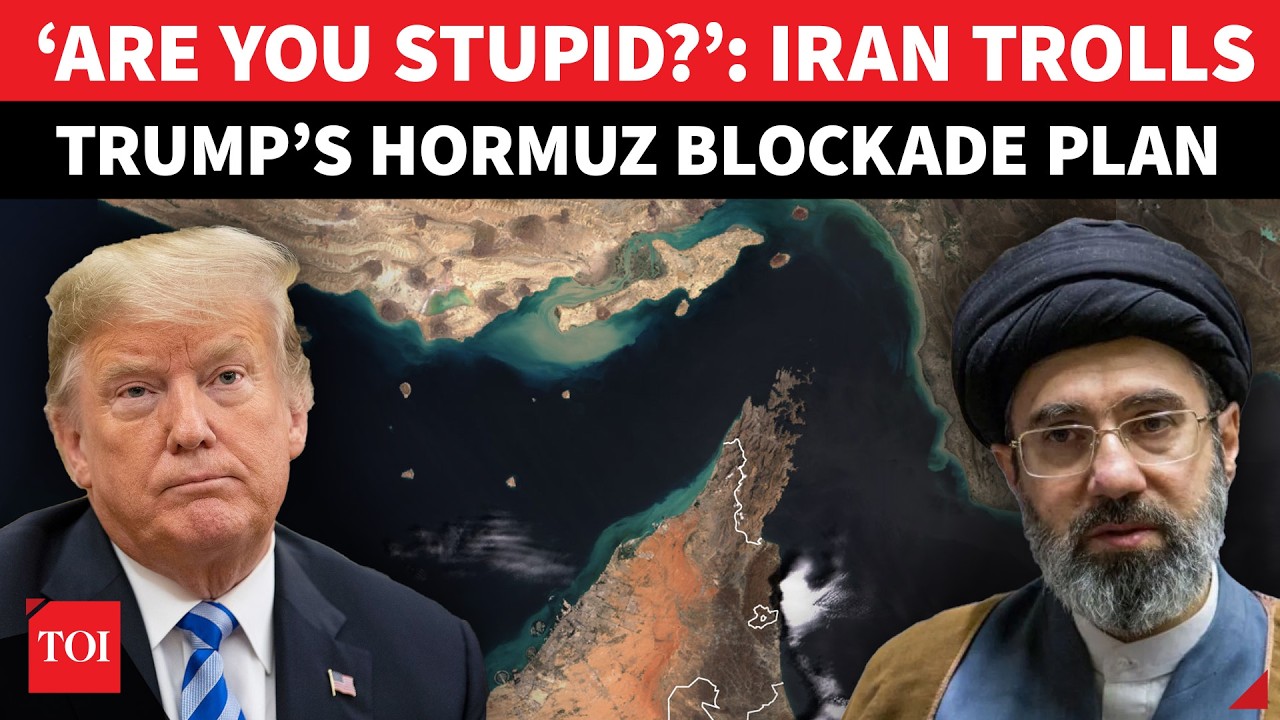
Discover how Iran counters Trump’s blockade threat on the Hormuz Strait, emphasizing diplomacy, strategic toll proposals, and global shipping risks.
Iran’s Bold Defiance: 7 Strategic Moves Against Trump’s Plan
In this episode, Times Of India dives into Iran’s aggressive countermeasures against Trump’s threat to control the Strait of Hormuz—the world’s most critical oil chokepoint. The video reveals Iran’s unwavering insistence on diplomacy over military domination and highlights a series of bold strategic moves that have major implications for global shipping and geopolitics.
Why is the Strait of Hormuz So Critical?
The Hormuz Strait is a narrow passage connecting the Persian Gulf with the Gulf of Oman and ultimately the rest of the world. It is responsible for transporting a significant percentage of the global oil supply and nearly 30% of the world’s fertilizer and other critical goods. During the segment, the host explains, "A blockade doesn’t open roots. It shuts them down." This statement encapsulates Iran’s belief that any forceful intervention in this international waterway would be counterproductive.
What Triggered This Geopolitical Tension?
Iran’s aggressive stance comes in response to alarming signals from the United States. Hours after US Vice President JD Vance confirmed the collapse of peace negotiations between Washington and Tehran, President Donald Trump posted a cryptic message on Truth Social. In his post, he hinted at an imminent and forceful military response. Trump even referenced a piece from Just The News, as he stated that the US Navy could easily regulate vessel movements along the strait. By doing so, Trump threatened a scenario where the US Navy could assert full control over this international shipping lane.
How Did Iran Label This Situation?
Iran’s response is nothing short of pointed. In the video, Iranian spokesperson Thran dismisses the idea of a blockade as a "self-made problem." He argues that any attempt to enforce a blockade would only worsen the situation rather than resolve it. In these turbulent moments, Iran asserts, "The only way forward... is diplomacy, not domination." This declaration is a direct challenge to the military-based approach being floated by the US administration under Trump. By framing the situation as one created by external pressures, Iran not only defends its national interests but also positions itself as a key advocate for dialogue and peaceful resolutions.
What is Iran’s Controversial New Proposal?
Adding to the dynamic, Iran’s Security Chief Abraham Azizi has introduced a proposition that has set off alarm bells around the world. He has proposed that all vessels entering the Hormuz Strait should pay tolls under Iranian jurisdiction. This dramatic move is designed to assert Iran’s claim to full management of the vital waterway, which Tehran argues is essential for its national security and economic interests. However, maritime watchdogs and global shipping experts express serious concerns over this proposal, labeling it illegal and warning that no single nation can impose charges on an international transit route without risking a severe backlash from the global community.
How is the Global Shipping Industry Reacting?
The proposal to impose tolls has triggered significant anxiety among ship owners and industry experts. The Times Of India report highlights that shipping companies across the globe are being instructed, "Do not pay. Do not comply." This guidance comes amidst a tense environment where nearly 400 oil tankers loaded with vital resources are stuck in the Gulf, while a mere 100 empty vessels are prepared to move into the area. The imbalance further complicates the already precarious supply chains, affecting not just oil, but also food cargo, industrial goods, and fertilizers. The host noted that even if the strait were to be cleared today, restoring the trust necessary for normal operations could take months.
What Are the Tactical Moves on the High Seas?
Beyond policy proposals and diplomatic verbal sparring, the tension on the high seas has reached an alarming level. Iranian state-linked Tasnim News Agency reported that a US Navy destroyer was forced to reverse its course after receiving a stark warning from Tehran. According to the video, Iran warned that any US military vessel entering the strait would be targeted within 30 minutes. This stern message was delivered during a critical stage of peace talks between high-level US and Iranian delegations in Pakistan, marking a dangerous escalation of tensions. Although American officials later downplayed this confrontation by confirming that several US Navy vessels successfully passed through the strait, Iranian sources remain firm in their stance, denying any such crossings.
How Does Trump’s Rhetoric Impact the Situation?
President Trump’s rhetoric has played a significant role in escalating tensions. His use of social media to announce that Washington had begun clearing the Hormuz Strait and that all 28 of Iran’s mine-laying vessels had been destroyed adds an alarming layer to an already volatile situation. This bold claim not only reinforces the threat of military engagement but also sets the stage for potentially more aggressive future actions. Trump's suggestion of a joint US-Iran venture to collect transit payments on the strait further complicates matters, as critics argue that such a move would only serve to legitimize unilateral control over a global lifeline, compromising the principle of free international navigation.
What are the Broader Implications for Global Energy and Trade?
The strategic importance of the Hormuz Strait creates a ripple effect far beyond the immediate region. Any disruption in this passage can have catastrophic consequences for global energy supplies and international trade. The video highlights that blocking or even severely restricting passage through the strait could lead to a dramatic shift in energy prices and supply chains worldwide. With nearly one-third of the world’s fertilizer supply, food cargo, and industrial goods passing through this route, geopolitical instability here could trigger a cascading effect on global markets, economic stability, and even political alliances on a global scale.
As the world watches this unfolding drama, the message from Tehran is clear: any strategy built on domination and coercion will create more problems than it solves. The strategic move to opt for diplomacy over outright military aggression underscores Iran’s intent to maintain regional influence while safeguarding its national interests. Iranian officials emphasize that a blockade would merely exacerbate tensions, leaving all parties worse off in the long run.
How Do Environmental and Economic Risks Compound with Military Risks?
Military tensions combined with economic instability pose a dual threat in the region. The Hormuz Strait is not only a critical route for energy exports but also a lifeline for global commerce. The video presents alarming data showing that the current imbalance in tanker traffic—around 400 loaded tankers waiting versus barely 100 empty ships ready to enter—can lead to severe supply chain disruptions. This situation is further complicated by the potential environmental risks from any military conflict, which could cause oil spills and other ecological disasters in one of the most sensitive maritime environments.
Shipping companies are in a state of high alert, with insurers and maritime experts warning against any actions that might lead to vessel entrapments. The fear is palpable as business leaders voice their concerns over the fragile ceasefire and the unrealistic assumption that trust and normalcy will instantly resume once the strait is cleared. In effect, even a temporary military maneuver could have long-lasting effects on global shipping, economic stability, and environmental safety.
What Does the Future Hold for the Hormuz Strait?
Looking ahead, the situation in the Hormuz Strait remains unpredictable. While diplomatic efforts continue behind closed doors in Islamabad, where US and Iranian delegations have met for the most significant talks in over five decades, the on-ground reality is fraught with tension. With both sides firmly entrenched in their positions, experts warn that any misstep could lead to a significant escalation, potentially involving further military action.
Iran’s insistence on controlling the passage, combined with its proposal to impose tolls on vessels, represents a bold assertion of sovereignty that challenges conventional international maritime norms. In contrast, the US’s aggressive rhetoric and calculated military maneuvers reinforce the risk of a broader conflict that could disrupt global energy flows and trade networks. The eventual outcome of these conflicting strategies will likely hinge on whether dialogue can overcome dogmatism, and whether both sides are willing to recalibrate their approaches to address mutual concerns.
The Times Of India video, through its incisive analysis, underscores the critical need for global cooperation in managing one of the most volatile regions in the world. As both nations continue to navigate a labyrinth of strategic interests, military posturing, and economic imperatives, one thing remains clear: controlling the Hormuz Strait is not just a regional issue—it is a global concern that demands careful, nuanced, and diplomatic resolution.
Conclusion
The unfolding crisis at the Strait of Hormuz serves as a stark reminder that power struggles over critical infrastructure, like energy corridors, have far-reaching consequences. Iran’s rebuttal to Trump’s blockade plans—asserting that a blockade is a "self-made problem"—highlights a broader debate about the efficacy of military dominance versus diplomatic engagement in resolving international disputes. With multiple layers of proposals, military posturing, and high-stakes negotiations, this situation is far from straightforward.
The strategic decisions made in the coming weeks could shape not only the energy landscape but also set important precedents for how nations engage with one another over shared resources and transit routes. As the global community watches with bated breath, the imperative remains clear: a solution based on diplomacy and mutual respect is the only path to de-escalation and lasting stability.
For those tracking global geopolitics and international trade, this episode on Times Of India offers critical insights into the evolving dynamics at play in the Persian Gulf. It is a vivid illustration of how entrenched national interests and geopolitical ambitions can collide, creating a maelstrom of uncertainty that reverberates across borders and oceans.
Frequently Asked Questions
What is the significance of the Hormuz Strait in global trade? The Hormuz Strait is a crucial maritime passage that links the Persian Gulf to international waters. It handles a large share of global oil exports and other essential goods. Any disruption in this region can significantly impact energy supplies and global commerce, making it one of the world’s most sensitive and strategically important chokepoints.
Why did Iran call the blockade plan a 'self-made problem'? Iran labeled the blockade plan as a "self-made problem" because it believes that imposing military control over the Strait of Hormuz would only exacerbate existing tensions and disrupt global trade, rather than resolving underlying security issues. Iranian officials contend that diplomacy, not domination, is the key to a lasting solution and to preserving regional stability.
How could Iran’s proposal to charge tolls on vessels affect international shipping? Iran’s proposal to charge tolls on vessels passing through the Hormuz Strait could have significant repercussions for international shipping. It challenges the principle of free passage on international waters and may lead to increased operational costs and legal disputes. Moreover, the proposal is seen by many as an attempt to assert sovereignty over a global transit route, potentially leading to broader geopolitical tensions.
What are the potential global impacts if the Hormuz Strait remains blocked? A prolonged blockade of the Hormuz Strait could severely disrupt the global supply chain, affecting not only oil imports but also food, fertilizers, and industrial goods. Such a disruption could lead to higher energy prices, economic instability, and increased inflation worldwide. Additionally, the environmental risks associated with halted or deflected shipping routes add to the hazard, impacting both the economy and the ecology of the region.