5 Must-Know Insights: Iran Rejects Pakistan’s Mediation Offer
 Factverse Insights|Politics|13 min read|Mar 31, 2026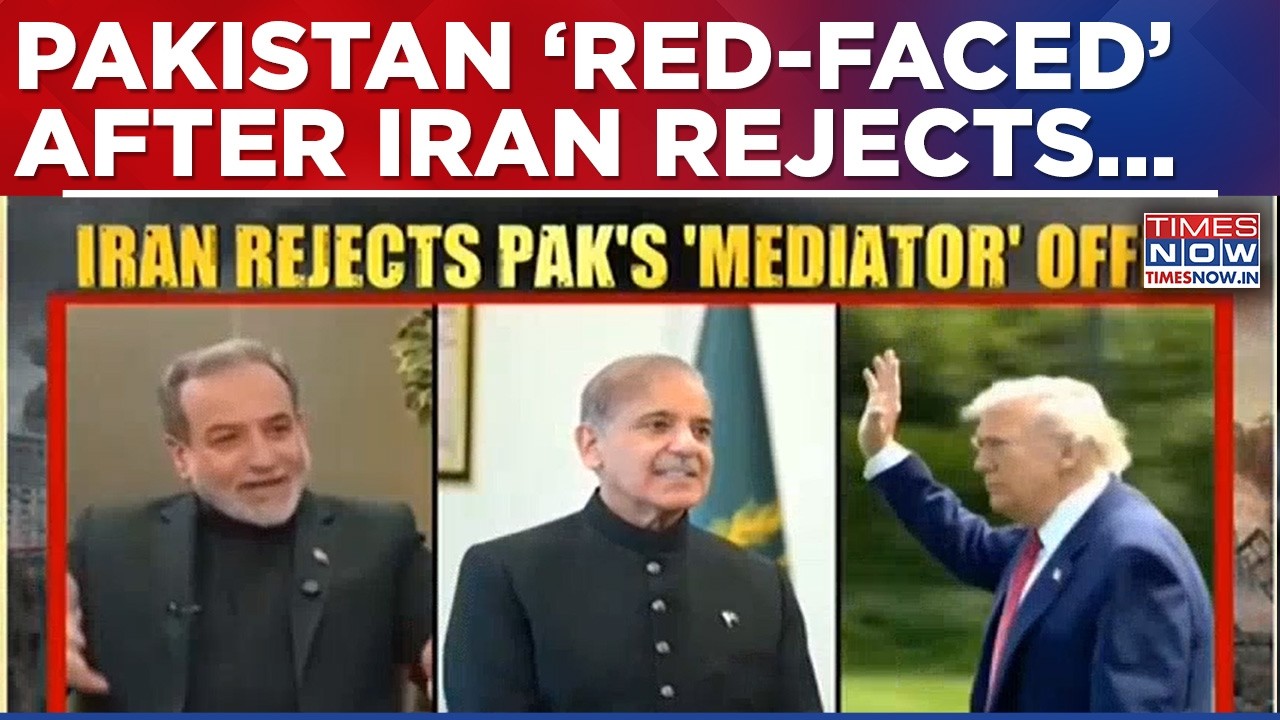
Discover the key insights behind Iran’s rejection of Pakistan’s mediation offer and the broader regional implications. Learn what this means for Iran, the US, and other stakeholders.
In this episode on Times Now, the discussion zeroes in on Iran’s bold rejection of Pakistan’s attempt to mediate between it and other global powers. The reporter explains that amid an intricate web of regional tensions, Iran staunchly rejects participation in any Pakistan-led dialogue and emphasizes that its stance remains unchanged. This article unpacks the critical insights, players, and implications of the diplomatic maneuver, ensuring you get the full story without needing to watch the video.
What Sparked the Mediation Offer and Iran’s Rejection?
Pakistan had recently volunteered to mediate between Iran, the United States, and Israel, hoping to fling itself into a central diplomatic role. The Times Now report reveals that Pakistan’s initiative was presented as a means to ease regional tensions and to position the country as a neutral broker in the escalating conflict. However, the spokesperson from Iran quickly quashed any notion of cooperation by stating emphatically, "Tehran didn't participate in any Pak-led engagement." This clear-cut dismissal is not just a footnote in diplomatic circles; it reflects deeper issues regarding trust, legitimacy, and unresolved historical grievances.
According to the report, Iran’s rhetoric makes it clear that it will not entertain discussions that undermine its established position. The spokesperson’s remarks underscore a tactic often used in international negotiations: branding an interlocutor’s proposals as illegitimate by insisting on the precedence of established protocols. As the report elucidates, Iran’s decision comes at a time when proposals originating from Washington have also met with strong resistance—described by Iranian officials as "illogical, excessive, and unreasonable." This language signals that Iran harbors deep-seated reservations about any external attempt to reframe its standing in the eyes of global powers.
Who Attended the Islamabad Peace Summit?
The summit organized in Islamabad was not a single-track negotiation but a complex assembly of representatives from multiple nations. The video details a guest list that sheds light on the real players behind the mediation narrative. Notably, representatives from Riyad were present, with Fezul bin Farhhan al-Sad representing the Saudi capital. Equally significant was the attendance of Hakan Fidan from Turkey, who brought his nation’s perspective into the mix. Additionally, a representative from an entity identified as Kra was on the guest list, rounding out the delegation.
This diverse delegation underscores a broader regional interest in the evolving situation. Pakistan’s effort appears to be an attempt to rally a coalition of regional players, each with steadily converging, yet distinct, strategic interests. The assembly’s composition hints at a power play where traditional alliances and new diplomatic openings are in flux. These details emphasize that Pakistan’s role is not just about mediating talks—it’s also about redefining regional alignments and vying for diplomatic credibility on a global stage.
Why Did Iran Reject the Mediation Offer?
Iran’s rejection of Pakistan’s mediation offer is rooted in several core factors. First and foremost, there is a question of legitimacy. In a statement that reverberates across diplomatic channels, a spokesperson for Iran noted that any forum hosted by Pakistan is considered purely their initiative, not representative of Iran’s broader policy. Essentially, Iran is drawing a firm boundary: it refuses to be associated with attempts it perceives as manipulative or self-serving.
Furthermore, Iran’s outright rejection also reflects its long-standing skepticism about indirect negotiations. The report mentions that, for Iran, direct dialogue is indispensable. The reliance on "talks via intermediaries" is seen as a suboptimal approach that compromises the clarity and impact of diplomatic negotiations. By dismissing these intermediary talks, Iran reinforces its position that any attempt at mediation must involve direct engagement—if at all.
Another crucial facet of Iran’s stance is its interpretation of the proposals coming from the United States. Iranian officials have labeled these as not just inadequate, but fundamentally flawed by nature. The criticism that these proposals are "illogical, excessive, and unreasonable" points to a broader narrative where Iran perceives external influences as attempts to manipulate the situation to favor Western interests. The rejection, therefore, is both a defensive maneuver and a strategic statement designed to preserve Iran’s negotiating posture in any future talks.
What Role Is Pakistan Attempting to Play?
Pakistan’s latest move to mediate in a high-stakes regional conflict appears to be both an opportunistic and an ambitious bid to bolster its international standing. The video reports that Pakistan’s mediation offer came as a reaction to a series of high-level communications involving American officials. It is said that President Trump himself engaged in discussions with Pakistani military leaders, thereby prompting a series of dialogues that involved not only Pakistan but also countries like Turkey and Egypt.
In positioning itself as an intermediary, Pakistan is essentially trying to fill a vacuum left by the lack of direct communications between Tehran and Washington. By stepping into this role, Pakistan is looking to transform its geopolitical identity—from a regional player to a global mediator. However, this dynamic is a double-edged sword. While it might elevate Pakistan’s regional stature temporarily, Tehran’s categorical refusal to participate in any Pakistan-led engagement has the potential to backfire, casting doubts on Pakistan’s ability to be a truly effective mediator.
The Pakistan-led initiative, as explained by the Times Now correspondent, is being met with mixed reactions. The fact that several states, including Turkey, Egypt, and regional powers like the representative from Kra, are involved suggests that Pakistan is attempting to create a coalition of interest—a multipolar mediation effort. However, the skepticism from Tehran indicates that without direct consent from all parties, especially from one of the central players, any mediation effort is likely to remain mired in controversy and inefficacy.
How Do These Developments Affect Regional Dynamics?
The unfolding narrative around Pakistan’s mediation offer and Iran’s robust rejection has significant ramifications for regional stability. The timing of these events is crucial, as the escalation of tensions between major powers in the region—particularly involving the United States, Israel, and Iran—has contributed to an already volatile geopolitical landscape.
The refusal by Iran to engage in any dialogue led by Pakistan could be interpreted as a broader rejection of third-party intervention in what Tehran considers an internal or bilateral matter. The insistence on handling communications through direct channels highlights a growing trend where traditional mediators are losing credibility. This situation has the potential to create rifts between states that have historical alliances but also competing strategic interests. As each nation positions itself to secure its agenda, the room for compromise narrows considerably.
Moreover, the discourse around mediation has broader implications for international diplomacy. The ambivalence toward negotiations conducted by intermediaries suggests that states with strong nationalistic convictions—like Iran—are increasingly prioritizing sovereignty over compromise. In turn, this approach can lead to a deadlock, where talks continue to be initiated through fragmented channels without ever resulting in substantial progress.
Additionally, the statement that "no direct talks have happened, only talks via intermediaries" paints a picture of a diplomatic process that is, at best, tentative and disorganized. This reliance on indirect negotiations casts a shadow over the prospects for any lasting resolution, particularly when each negotiating party bases its stance on principles that are steeped in historical mistrust and geopolitical rivalries.
What Are the Strategic Implications for the United States and Its Allies?
The reported mediation attempt is not only a regional matter—it also holds significant implications for the United States and its allies. For the US, the rejection by Iran of any Pakistan-led initiative further complicates the diplomatic chessboard in the Middle East. When Tehran dismisses the proposals as "illogical, excessive, and unreasonable," it sends a clear message that American strategies relying on third-party mediation may not yield the desired outcomes.
From the US perspective, the reliance on ancillary players like Pakistan to broach negotiations with Tehran has long been seen as a necessary workaround given the stalemate in direct talks. However, with Iran’s firm dismissal, the effectiveness of such a strategy is thrown into doubt. The intricacies of this diplomatic scenario are further muddied by the involvement of multiple nations, each with divergent agendas. The U.S. finds itself needing to recalibrate its approach to ensure that future negotiations do not become ensnared in a web of conflicting interests and indirect communication channels.
In the larger scheme of things, this dynamic influences not only the bilateral relations between the US and Iran but also the alliances that underpin American strategies in the region. The expectation that intermediaries will facilitate negotiations without long-term repercussions is increasingly being challenged by the realities on the ground. As long as Tehran perceives mediation efforts as an infringement on its sovereignty or as maneuvers designed to serve external interests, the prospects of a comprehensive, lasting agreement remain slim.
How Do Regional Observers Interpret Pakistan’s Move?
Regional analysts are weighing in on Pakistan’s latest mediation efforts with a mixture of skepticism and cautious optimism. On one hand, Pakistan’s bold offer to mediate could elevate its role on the international stage and potentially earn it considerable diplomatic leverage. On the other hand, the outright rejection from Tehran underscores the inherent difficulties of brokering peace in a region rife with long-standing rivalries and diverging interests.
The Times Now report highlights that external mediators, including Pakistan, Turkey, and Egypt, have attempted to bring parties like Iran and the US to the negotiation table. However, the absence of direct dialogue and the reliance on intermediaries have raised questions about the real effectiveness of these initiatives. Some experts argue that any mediation lacking the full endorsement of all parties involved—including especially key players like Iran—risks being reduced to ceremonial talks that yield little in the way of substantive progress.
Pakistan’s intentions, as examined by the commentators, seem to be twofold: to secure a more prominent role in regional diplomacy and to help diffuse a potentially explosive geopolitical standoff. However, the diplomatic calculus reveals that both its national image and the broader interests of regional stability hang in the balance. The failure to get Iran on board might lead Pakistan to reconsider its approach, possibly prompting a shift toward a more multilateral framework that includes direct negotiation channels.
Is a Diplomatic Breakthrough Achievable?
Despite the ongoing tussle between competing diplomatic narratives, the question remains: can this standoff eventually give way to a genuine, lasting breakthrough? The current state of affairs, as detailed in the Times Now report, suggests that a comprehensive resolution is still a distant prospect. With all talks having been conducted via intermediaries, the lack of face-to-face engagement only deepens the chasm between the involved parties.
Critics of the current mediation process argue that without direct dialogue, any agreement reached is likely to be fragile at best. Iran’s commitment to direct talks and its outright dismissal of proposals orchestrated by Pakistan highlight a broader trend of diminishing trust in unconventional diplomatic channels. This trend, if left unaddressed, could exacerbate regional tensions and lead to a cycle of failed negotiations.
At the heart of the issue is the question of credibility. Iran’s refusal to acknowledge Pakistan’s mediation offer implies that, unless certain conditions are met—most notably, the reinvigoration of direct communication channels—the path to de-escalation will remain obstructed. For policymakers, this underscores the urgent need to reexamine the framework for negotiations in the region. Strategies that rely on piecemeal intermediary talks must be overhauled in favor of more transparent, direct approaches if a genuine breakthrough is to be achieved.
Moreover, the current diplomatic impasse has broader implications for international conflict resolution mechanisms. The reliance on mediators who are perceived by key states as partial or self-serving undermines the potential for establishing a lasting peace. As global power dynamics continue to shift, the challenge lies in constructing a negotiation model that accommodates the legitimate interests of all parties involved. Until that happens, the prospects for a robust and enduring diplomatic breakthrough remain uncertain.
Conclusion
The Times Now episode brings to the forefront a critical moment in regional diplomacy where Pakistan’s mediation offer collapses under the weight of Iran’s resolute rejection. With Iran clearly stating that it is not a party to any Pakistan-led engagement and dismissing intermediary talks as insufficient, the scenario throws into sharp relief the often complex interplay between regional ambitions and global geopolitical strategies. As the debate continues, it is evident that unless new, direct channels for negotiation are established, the enduring tensions between the involved nations are unlikely to dissipate.
In summary, this detailed analysis of the diplomatic standoff reveals:
• Pakistan’s mediation offer was an ambitious proposal aimed at easing regional tensions, but it was met with a firm denial from Iran.
• A diverse group of international representatives attended the Islamabad summit, highlighting the multifaceted interests at play.
• Iran’s rejection is grounded in its demand for direct talks and its view that Pakistan-led forums do not reflect its policy stance.
• The use of intermediaries, rather than direct negotiations, is seen as a significant barrier to resolving the crisis effectively.
• The implications of these developments extend to the broader dynamics of US-led diplomacy and regional stability, compelling policymakers to reconsider existing frameworks for conflict resolution.
As the situation evolves, the uncertainty surrounding the mediation process serves as a reminder of the intricate challenges inherent in international diplomacy. Whether or not Pakistan can recalibrate its approach remains to be seen, but what is unmistakable is that genuine progress will require a reimagined method of engagement—one that prioritizes direct communication and mutual trust among all parties involved.
Frequently Asked Questions
What prompted Iran's rejection of Pakistan's mediation offer? Iran rejected Pakistan's mediation proposal due to concerns over legitimacy and the reliance on indirect negotiation channels. Iranian officials insisted on direct talks and dismissed any forum led by Pakistan as unrepresentative of its official stance. They also criticized the proposals as being "illogical, excessive, and unreasonable," emphasizing that their approach favors direct dialogue over intermediary discussions.
Who were the main players involved in the Islamabad peace summit? The Islamabad peace summit saw a diverse group of international representatives. Key participants included Fezul bin Farhhan al-Sad from Riyad, Hakan Fidan from Turkey, and a representative from an entity identified as Kra. Pakistan hosted the summit in an effort to mediate between conflicting parties, although Iran later rejected any involvement in these Pakistan-led engagements.
Why did Iranian officials describe US proposals as 'illogical, excessive, and unreasonable'? Iranian officials critiqued the US mediation proposals with strong language, referring to them as "illogical, excessive, and unreasonable." This description reflects deep-seated distrust in external attempts to influence their strategic position and underscores their commitment to maintaining a firm stance in direct negotiations. Tehran perceives these proposals as part of a broader strategy to compromise its sovereignty rather than encourage genuine dialogue.
What impact could Pakistan's mediation efforts have on regional stability? Pakistan's mediation efforts, while ambitious, risk increasing regional tension if they fail to secure participation from all parties, particularly Iran. The reliance on intermediary talks rather than direct negotiations can potentially lead to fragmented diplomacy and unaddressed conflicts. However, if recalibrated to include transparent and direct dialogue, such mediation attempts might eventually contribute to easing long-standing regional rivalries and promoting stability over time.