Iran's Invisible Nuclear Bomb: Shifting Global Defense Strategies
 Factverse Insights|Politics|15 min read|Mar 17, 2026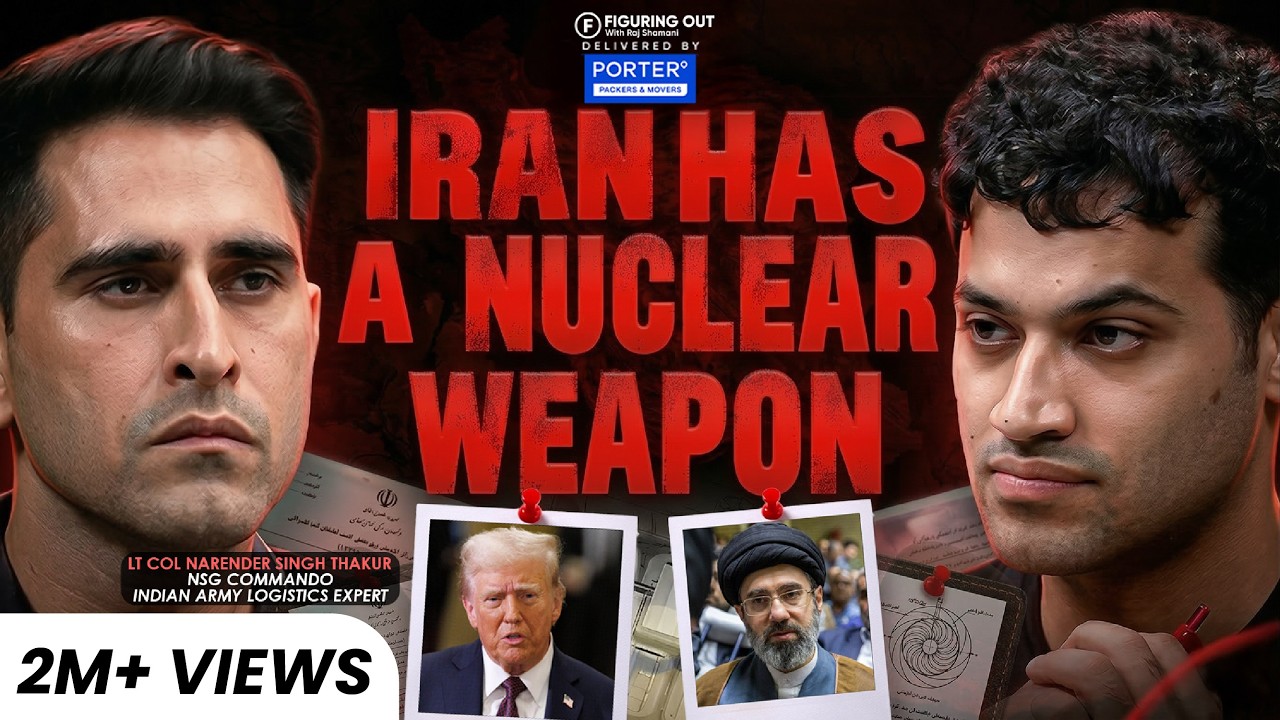
Explore how advanced defense systems, espionage tactics, and asymmetric warfare shape today’s high-stakes geopolitical military strategies, from missile interceptors to nuclear deterrence.
Introduction
In this episode of The Invisible Nuclear Bomb - Strait of Hormuz & Global Economy | Lt Col Narender | FO484 Raj Shamani, Lt Col Narender dives deep into the evolving dynamics of global military strategies, shedding light on how advanced defense systems, economic sanctions, and asymmetric warfare are reshaping the future of armed conflict. The discussion spans topics that range from the nuances of missile interception and nuclear deterrence to the economic and humanitarian impacts of using so-called "invisible bombs." Throughout the discussion, he stresses that, in modern warfare, it isn’t just about the sheer physical bombardment; it’s also about strategic messaging, credible deterrence, and safeguarding national economic interests.
The New Face of Geopolitical Military Strategy
Evolving Battlefield Concepts
Lt Col Narender explains that traditional war paradigms are rapidly giving way to new forms of combat that emphasize technology, precision, and limited yet highly impactful military actions. "When you have weapons systems that can intercept missiles from 1000 kilometers away and create a cloud that disrupts entire refineries, you’re operating in a whole new level of warfare," he remarked. This is an era where unconventional warfare dovetails with advanced defense strategies, and the goal is not only to thwart an enemy attack but also to economically debilitate an adversary by creating uncertainty in global supply chains.
According to him, one of the most significant shifts in modern military thinking is the assertion that modern weaponry does not merely inflict physical damage but also alters geopolitical balances. This includes the use of nuclear or chemical strategies that stop short of causing widespread human casualties yet have a profound economic and political impact. For instance, he mentioned how a concept like the "State of Hormuz" could be used to signal intent without crossing the red line into full nuclear conflict—a move that has enormous deterrence value when the cost of war is measured not only in lives but in disrupted economies and global energy flows.
The Invisible Nuclear Bomb Concept
The name of the video itself sparks interest: the idea of an 'invisible nuclear bomb'—a metaphor for the potent mix of military might and economic leverage. Lt Col Narender elaborates on this concept at length, describing how governments and military hierarchies now have at their disposal not just physical bombs, but a suite of strategic tools. These tools are designed to project power subtly and force adversaries into disadvantaged negotiations.
He added, "You might have a system capable of launching a bomb weighing over 13,000 kg, but the key is in the fact that advanced targeting and precision allow you to hit only economic assets such as refineries or command centers, rather than indiscriminately targeting civilian areas." This targeted approach, he argued, is meant to create a crippling economic effect without necessarily escalating into an all-out humanitarian catastrophe.
Advanced Defense Systems in Focus
Missile Interceptors and Air Defense Systems
One of the cornerstone topics discussed is the evolution of air defense systems. Lt Col Narender spends a considerable amount of time explaining the layered defense architectures such as the Patriot, complemented by systems with longer detection and interception ranges. For example, he states that some modern systems can detect incoming missiles 1000 kilometers away and intercept them 600 kilometers before they reach their target. These systems not only protect vital infrastructure but also send a clear strategic message to potential aggressors: any coordinated attack will be met with a technologically superior response.
In discussing these systems, he noted, "The range and precision of these interceptor systems ensure that even if an enemy manages to strike, the impact can be contained before it spreads to a wider area." Such advancements provide a dual benefit – they deter adversaries and bolster the confidence of nations allied with high-tech defense networks.
The Role of Offensive Weapons
The conversation also delved into the arsenal of offensive weapons available to states like the United States and Russia. Systems such as the GB57, often referred to as the "Mother of All Bombs," represent the zenith of heavy bombing technology designed solely for bunker busting. These weapons are engineered to neutralize fortified military installations and underground command complexes. Lt Col Narender explained that although such weapons have staggering destructive power, their use is calculated to minimize collateral damage. He mentioned, "These bombs are not meant to target civilians. The objective is to disable the enemy's critical infrastructure, thereby reducing long-term operational capacity."
Furthermore, he discussed the concept of thermobaric bombs and how they harness shockwaves and intense heat to achieve their destructive ends. These bombs, by generating massive overpressure, are capable of collapsing entire structures, including fortified bunkers. The discussion pointed out that while these weapons are effective, their use brings with it significant ethical and strategic dilemmas, particularly regarding the collateral impact on civilian populations.
Economic and Humanitarian Dimensions
The Economic Cost of Modern Warfare
A recurring theme throughout the discussion is that modern military strategies are inextricably linked to the global economy. Lt Col Narender brought attention to the notion that economic sanctions and disruptions—whether by targeting oil refineries, shipping routes, or insurance costs—are as potent as direct military strikes.
He noted that striking critical infrastructure, such as refineries, leads to an immediate spike in insurance costs and creates what he poetically referred to as "black rain." This phenomenon, which results from burning oil deposits, is compared to the aftermath of historical nuclear strikes like Hiroshima and Nagasaki. He explained, "The black rain is not just a by-product of a fire; it is a deliberate tactic designed to inflict long-term economic damage." Such strategies can force an adversary to face not only immediate military losses but also protracted economic hardship.
Human and Environmental Toll
While modern strategies are increasingly designed to avoid mass civilian casualties, the long-term humanitarian and environmental costs remain severe. The use of white phosphorus—a chemical agent known for producing extreme heat and causing grievous injuries—was also discussed. Lt Col Narender stressed that while white phosphorus is not officially classified as a war crime, its use remains ethically questionable. He stated, "When you burn not just skin but even damage bone, you are creating lifelong suffering. We must ask ourselves if the cost of war, even when measured in economic or strategic terms, is worth inflicting such lasting human trauma."
Furthermore, the dialogue touched on the insidious nature of chemical and biological warfare components. These are weapons that, though they might have a delayed onset of symptoms, can drastically affect populations for years after their initial deployment. The discussion made it clear that the cumulative, long-term impact of such tactics might lead to societal upheaval and a dramatic reshaping of political power structures globally.
Geopolitical Consequences and Strategic Partnerships
Shifting Alliances in a High-Stakes World
The episode did not shy away from the broader geopolitical implications of these military strategies. Lt Col Narender examined how the interplay among nations—especially in the Middle East and Asia—underpins modern defense postures. He highlighted that while the United States enjoys expansive global reach through its network of military bases, countries like Iran, Russia, and even China are deploying their own strategic systems in a bid to level the playing field.
A particularly interesting insight involved how smaller nations find themselves caught up in these high-stakes games. For instance, the discussion noted that many Middle Eastern countries, despite possessing modern defense systems, are still vulnerable to asymmetric warfare tactics such as drone swarms or cyber attacks. "These nations might have enough capacity to deflect a major missile attack, but a coordinated, low-cost drone assault or cyber intrusion can cripple their command and control networks," Lt Col Narender observed.
The Role of “Buffer States” and Regional Power Dynamics
Another key topic was the concept of buffer states—territories or allied regions used as a strategic shield against direct military confrontation. Lt Col Narender mentioned that Russia, for example, has long emphasized its need for a buffer zone between itself and Europe. He explained, "Russia does not want NATO forces on its doorstep; its requests are not for mere friendship but for a credible, militarized margin that effectively deters any aggression."
This strategic nuance is significant because it demonstrates that global military alliances and rivalries are not solely about who possesses the biggest bomb or the most advanced interceptor. Instead, it is increasingly about who can leverage economic pressure, technological innovation, and diplomatic maneuvering to secure national interests. The discussion also touched on how countries like India, while investing massively in modern missile and drone technologies, are also keenly aware of the geopolitical payoffs that accompany a robust defense posture. India’s balancing act between economic growth and military expenditure is emblematic of the trade-offs faced by nations in a world where every missile test has implications far beyond the battlefield.
Strategic Deterrence Over Offensive Posturing
Within this context, the concept of strategic deterrence has taken center stage in modern military doctrine. Rather than seeking outright military victory, many nations now rely on the threat of overwhelming retaliation to discourage adversaries. Lt Col Narender discussed the immense scale and cost of launching a pre-emptive strike, suggesting that the economic fallout—measured in billions of dollars in lost production and skyrocketing insurance costs—acts as a powerful deterrent against escalation.
He emphasized, "We must remember that the ultimate cost of any war is human life; economic warfare is not a substitute for a proper, ethical resolution. The deterrence lies in making sure that any act of aggression is met not only with military might but also with a crippling economic backlash." This multifaceted approach to defense means that even if a conflict were to erupt in localized forms, the broader global economy would pay a significant price, thus forcing adversaries to reconsider the value of initiating such engagements in the first place.
The Future of Warfare: Asymmetric and Cyber Dimensions
The Rise of Asymmetric Tactics
In a clear indication of how conventional military might is being increasingly challenged, Lt Col Narender cited examples from the ongoing conflicts where smaller, inexpensive platforms such as drones have achieved outsized effects on costly battle tanks or command centers. The lesson, as he articulated, is that modern warfare is evolving from brute force to precision strikes carried out by agile, sometimes even disposable, systems. "A $500 drone today can disable a $5 million tank tomorrow," he noted, emphasizing that the cost-benefit equation in warfare is shifting rapidly in favor of asymmetric solutions.
This paradigm shift extends to the use of artificial intelligence (AI) and cyber warfare, where data and rapid decision-making are proving to be just as critical as heavy ordnance. Nations are now investing heavily in AI systems that integrate with their defense platforms, providing real-time mapping, target acquisition, and threat analysis. These AI-driven capabilities not only improve the accuracy of traditional systems but also enable a new class of cyber-physical attacks that could paralyze an adversary’s infrastructure without a single bullet being fired.
Cyber Warfare and Information Operations
Another important trend highlighted in the discussion is the integration of cyber warfare into traditional military strategy. In today’s conflict environment, controlling the narrative is almost as important as controlling the battlefield. Cyber attacks aimed at disrupting communications, financial systems, or even public morale can have cascading effects on the outcome of a conflict. Lt Col Narender remarked, "When you see coordinated information operations that can trigger a color revolution in multiple countries, you realize that modern battles are fought as much on social media and digital networks as on land and sea."
This digital component of warfare can serve dual purposes. Not only does it weaken an adversary by sowing disorganization and mistrust, but it also serves as a cautionary signal to allies and potential adversaries alike: any attempt to undermine a nation’s critical infrastructure will be met with a high-tech counterstrike. The synergy between cyber capabilities and conventional defenses underscores the need for nations to secure all fronts—physical and digital—to maintain geopolitical stability.
Integrating Advanced Defense with Economic Strategy
Balancing Military Objectives with Global Markets
Throughout the discussion, a recurring insight was the recognition that military actions cannot be isolated from their economic impacts. The use of defense systems and advanced weaponry has a ripple effect on global markets. For example, when a nation is perceived to be capable of shutting down key shipping routes like the Strait of Hormuz, it sends shockwaves through global energy markets, resulting in skyrocketing oil prices and increased insurance costs. Lt Col Narender explained, "Every $10 increase in oil prices can translate into billions in revenue for a country like Russia, while simultaneously destabilizing economies that rely on affordable energy supplies."
This intrinsic connection between defense and economics creates a scenario where military actions are not just tactical decisions; they are strategic business moves that affect stock markets, inflation, and even the day-to-day cost of living in smaller economies. The integration of these factors into modern military strategy underscores the increasingly blurred lines between economic policy and warfare.
The Role of Diplomatic Backchannels and Strategic Messaging
No discussion of global military strategy would be complete without acknowledging the importance of diplomacy. As Lt Col Narender pointed out, behind every overt military move lies a complex web of diplomatic maneuvers. Whether it is negotiating oil deals with major importers such as China, or managing the expectations of regional players like India and various Middle Eastern nations, strategic messaging plays a critical role in determining the outcome of any potential conflict.
He stressed, "In this game, it’s not enough to have technological superiority; you must also maintain credible partnerships through continuous diplomatic engagement. Without it, even the most advanced defense systems can prove ineffective in the face of coordinated geopolitical pressure." The discussion highlighted several instances where military posturing was closely tied to diplomatic objectives, making it clear that superior firepower alone does not guarantee strategic success. Instead, the interplay between innovation on the battlefield and savvy negotiations off it will likely define the future of international conflict.
The Lessons for Global Leaders and Policy Makers
Strategic Caution in an Era of Rapid Change
As the conversation moved toward its conclusion, Lt Col Narender offered a stark reminder to global leaders: strategic caution must prevail, especially when the stakes are as high as they are today. He noted that rapid escalation, particularly through advanced military technologies, can easily spiral out of control. "The cost of war is measured in not just dollars and resources, but in human lives and the long-term stability of whole regions," he warned. It is this caution that should underpin every decision regarding the deployment of modern defense systems and the use of nuclear or chemical deterrents.
Rethinking Traditional Approaches to National Defense
The insights shared in this episode underscore the need for a complete rethinking of traditional defense and military strategies. In an environment where asymmetric warfare, cyber operations, and strategic economic maneuvers are becoming the norm, national defense must be reimagined. Innovation in technology is critical, but so too is the ability to balance these advancements with diplomatic nuance and ethical considerations. As Lt Col Narender aptly put it, "It’s not just about winning the battle—it’s about ensuring that when the dust settles, nation-states and their citizens are not left with an irreparable legacy of pain and economic ruin."
Conclusion
This episode offers a wide-ranging and in-depth look at how modern geopolitics is being reshaped by advanced defense systems and economic warfare. From precision missile interceptors and strategic nuclear deterrents to the intricate interplay between diplomacy and cyber operations, Lt Col Narender’s insights reveal a world where military strategy is more complex—and its consequences more profound—than ever before.
The discussion makes it clear that the traditional markers of military might are no longer sufficient in isolation. Instead, nations must now integrate technology, strategic messaging, and economic considerations to create a modern defense posture that is both potent and responsible. The future of warfare is evolving, and with it, the need for thoughtful, balanced strategies that protect not just national borders but the global economy and humanity itself.
For policymakers and military strategists alike, these insights offer a crucial reminder: maintaining peace and stability in a rapidly changing world requires not merely the accumulation of advanced weaponry but the judicious use of such power combined with wise political leadership. As the episode vividly illustrates, the challenges ahead are as much about managing global markets and diplomatic alliances as they are about the latest generation of bombs and defense systems.
By understanding these interconnected dimensions, global leaders can better navigate the high-stakes arena of modern geopolitics, ensuring that the destructive potential of advanced military strategies does not ultimately undermine the very foundations of international security and prosperity.
Overall, this episode serves as a powerful call to reexamine and adapt our traditional concepts of war. It reinforces the idea that effective defense in the 21st century hinges on an integrated approach that leverages state-of-the-art technology, robust economic strategies, and strategic diplomatic engagement. As the world’s military powers continue to innovate, the message remains clear: true security comes from the ability to impose credible deterrence while simultaneously safeguarding the global economic and humanitarian order.
In summary, Lt Col Narender’s comprehensive discussion on geopolitical military strategies and advanced defense systems reveals that the key to modern warfare is not sheer force but a calculated blend of technological innovation, economic pressure, and strategic diplomacy. With these insights, the global community must now prepare for a future in which the true cost of war is measured far beyond the battlefield.