Dramatic Breakdown: Key Insights From 21-Hour Iran Talks
 Factverse Insights|World|11 min read|Apr 12, 2026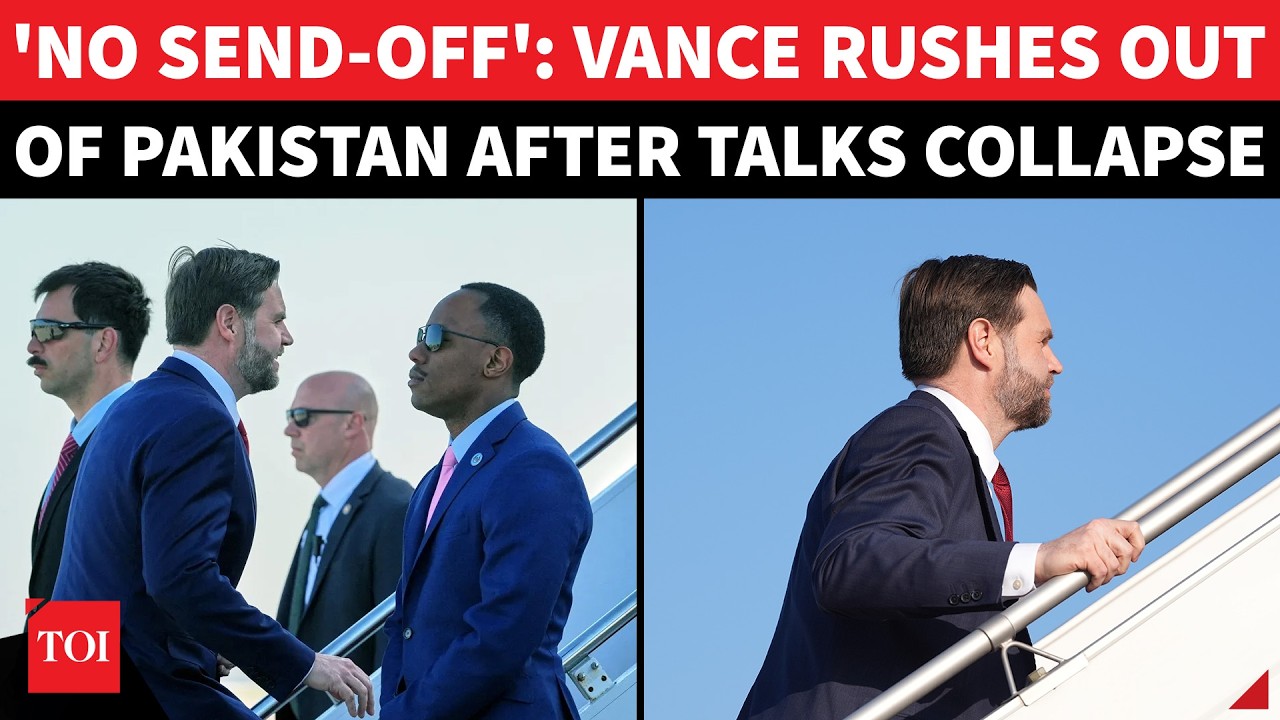
Explore the dramatic exit from 21-hour Iran talks hosted in Pakistan, key red lines, and what it means for future nuclear negotiations.
In this detailed analysis, we unpack the dramatic 21-hour negotiation breakdown between the United States and Iran hosted in Pakistan. This article highlights the key red lines, the role played by the Pakistani hosts, and the broader implications for nuclear non-proliferation efforts. Read on for the complete breakdown of events and strategic insights from this high-stakes diplomatic encounter.
What Led to the Breakdown of the 21-Hour Iran Talks?
During a marathon session lasting over 21 hours, U.S. negotiators tried to forge a long-term agreement with Iran. The discussions, hosted by Pakistan’s Prime Minister and Field Marshal Maner, were intensive and full of substantive dialogue. However, the U.S. representatives, speaking on Times Of India, revealed that after all the detailed talks, no deal was reached. They stated, "We have made very clear what our red lines are, what things we’re willing to accommodate them on, and what things we’re not willing to accommodate them on." This statement underscores a primary reason for the breakdown: Iran’s refusal to commit firmly to halting its nuclear ambitions.
The negotiators explained that while several issues were on the table — including Iran’s frozen assets and previously destroyed enrichment facilities — the core stumbling block remained Iran’s unwillingness to offer an unambiguous, long-term commitment to halt its nuclear weapon program. The official noted, "The simple question is, do we see a fundamental commitment... not just now, not just two years from now, but for the long term?" This insistence on a definitive commitment became a non-negotiable red line for the U.S. side.
How Did the United States Set Its Red Lines?
The U.S. delegation entered the talks with a clear agenda: to obtain an affirmative guarantee from Iran that it would not pursue nuclear weapons or the related technological means to quickly achieve such a capability. During the negotiations, one official pointedly stated, "We need to see an affirmative commitment that they will not seek a nuclear weapon." This was not merely a short-term measure but a long-standing policy meant to deter any future ambitions for nuclear armament.
This insistence reflects the cautious approach adopted by the United States in nuclear negotiations since the previous agreements started to face challenges. The U.S. negotiators were prepared to be flexible on several points — including discussions around financial assets and other technical matters — but they drew the line at Iran’s nuclear ambitions. The red lines set by the U.S. served as the foundation for the session, illustrating the adversarial nature of the negotiation dynamics.
What Role Did Pakistan Play in These Talks?
Pakistan played a critical role in facilitating this high-stakes negotiation. The Pakistani leadership, including the Prime Minister and Field Marshal Maner, were lauded for their hospitality and diplomatic support despite the talks falling apart. In the conversation, the U.S. representatives explicitly praised their hosts, noting, "Whatever shortcomings of the negotiation, it wasn't because of the Pakistanis, who did an amazing job." This recognition points to Pakistan’s strategic importance as a regional facilitator and mediator in complex international discussions.
Pakistan’s involvement not only provided a neutral ground for these discussions but also demonstrated its growing influence in global geopolitics. By hosting talks of this magnitude, Pakistan has positioned itself as a key player in bridging, or at least attempting to mediate, the widening gap between the nuclear ambitions of Tehran and the non-proliferation priorities of Washington.
Why Is the Iran Nuclear Commitment So Critical?
The central focus of the talks was to secure a permanent assurance from Iran regarding its nuclear intentions. The U.S. delegation stressed that any deal would need to include an explicit commitment preventing Iran from seeking the technologies necessary to rapidly develop a nuclear weapon. As one negotiator explained, "The core goal of the president of the United States is to see a fundamental commitment for the Iranians not to develop a nuclear weapon." This commitment is viewed as essential to maintaining regional stability and preventing an escalation of nuclear arms proliferation.
In the context of global security, the insistence on such a commitment is extremely significant. The possibility of a nuclear-armed Iran has been a point of international concern for decades. Thus, the U.S. negotiators' inability to secure that commitment underscores a broader strategic challenge. Without this assurance, the talks could not meet their primary objective, leaving the global community facing uncertain prospects for non-proliferation.
How Was Communication Maintained During the Talks?
Continuous communication with senior leaders was a hallmark of these negotiations. The U.S. representatives confirmed that the President, along with members of the national security team like Admiral Cooper, Pete, Marco, and Scott Ben, were kept updated regularly. One official mentioned, "We were talking to the president consistently — a half dozen times, a dozen times over the past 21 hours." This level of direct communication highlights the critical nature of the negotiations and the high stakes involved.
This seamless back-channel communication ensured that the U.S. leadership was informed in real-time about the progress and challenges of the discussions. Such continuous updates allowed for quick decision-making and reaffirmed the administration’s commitment to negotiating in good faith. The leadership’s proactive engagement, even during multiple rounds of breaks, demonstrates the friction inherent in high-level diplomacy where time-sensitive decisions can have far-reaching consequences.
What Was the Final Proposal Put Forward by the U.S.?
After extended discussions, the U.S. delegation left the negotiation table with what they described as their "final and best offer." Despite a flexible approach on multiple ancillary issues, the core proposal rested on the demand for an explicit, long-term commitment by Iran to forego nuclear weapons development. The final message conveyed was one of clear parameters: "We'll see if the Iranians accept it." This statement illustrates a final, non-negotiable boundary set by the U.S. in the talks.
The inability of the talks to yield a favorable result for the U.S. is a reflection of the broader geopolitical friction that has come to define U.S.-Iran relations. With a solid final proposal on the table, the breakdown suggests that the divergence between U.S. red lines and Iranian expectations remains too wide. This outcome signals a clearly demarcated stance from Washington, one that is unlikely to bend in the face of ambiguous commitments or partial measures.
How Does This Breakdown Impact Future Nuclear Negotiations?
The fallout from these 21-hour talks will have significant implications for future nuclear negotiations. For one, it reinforces the idea that any viable agreement must contain incontrovertible safeguards against nuclear proliferation. The insistence on a long-term commitment by Iran sets a precedent that can shape the nature of subsequent diplomatic engagements. Experts believe that this outcome may prompt a rethinking of strategies on both sides, especially regarding how red lines are communicated and enforced.
This breakdown might also drive renewed international efforts to bring both sides to the table with a fresh perspective. With tensions high, diplomatic back channels will likely be activated again, requiring both patience and innovation from international mediators. The insistence on clear, unambiguous commitments from Iran is poised to become a benchmark for all future negotiations, prompting a deeper analysis of how trust can be built and sustained in such volatile environments.
What Are the Strategic Implications for Global Geopolitics?
The collapsed talks carry broader implications for global geopolitics. On one hand, the inability to secure a deal marks a setback for efforts to manage nuclear proliferation in a volatile region. On the other, it underscores the complexity of negotiating with states that have long-term strategic and security interests at stake. An important insight from this episode is that diplomatic successes in one area—such as financial asset discussions—can be undermined by failures in another, notably nuclear commitments.
For global policymakers, the breakdown serves as a cautionary tale. It highlights the necessity of balancing immediate strategic interests with long-term security imperatives. The U.S. delegation’s clear stance on nuclear red lines has potential ripple effects, influencing how future negotiations are structured not only with Iran but also with other countries facing similar challenges. In essence, the failed talks are likely to reshape the dialogue around nuclear non-proliferation and international security for the foreseeable future.
How Do Diplomats Reflect on Negotiating in Good Faith?
Throughout the negotiation process, U.S. officials repeatedly emphasized that they were negotiating in good faith. They noted that despite the prolonged and challenging 21-hour session, every effort was made to reach an agreement. The negotiators stressed, "We did that and unfortunately we weren't able to make any headway." This sentiment captures the dual nature of diplomacy where all parties may have sincere intentions, yet foundational differences can derail agreement.
The concept of negotiating in good faith is vital in international diplomacy. Even when talks fail, the process can build mutual understanding and outline clear expectations for future encounters. In this case, the U.S. continuous efforts to communicate both internally and with the Iranians underscored a disciplined and strategic approach that, despite falling short, provides valuable lessons on the complexities of diplomatic negotiations.
What Lessons Can Be Learned From This Negotiation Breakdown?
The dramatic exit from the 21-hour talks offers several critical lessons. First, it reinforces the importance of having clearly defined red lines in negotiations involving sensitive issues like nuclear proliferation. Second, it demonstrates that even when negotiation conditions are favorable—such as a hospitable and neutral hosting environment like Pakistan—the underlying strategic divisions can overwhelm the process. Finally, the situation underscores the need for robust communication channels both within the negotiating team and with top leadership.
This episode serves as a reminder that diplomatic engagements are rarely straightforward. Even with flexible approaches to financial and technical issues, the central concern about nuclear weapons remains a deal-breaker when not mutually agreed upon. Decision-makers on both sides must understand that trust and long-term commitments cannot be assumed; they must be explicitly secured and maintained over time.
Conclusion
The 21-hour negotiation breakdown between the United States and Iran in Pakistan is a stark reminder of the complexities inherent in diplomatic engagements over nuclear issues. With the U.S. demand for a clear and enduring commitment from Iran to renounce nuclear ambitions as its non-negotiable red line, this session highlighted both the fragility and the crucial importance of trust in international negotiations. While the discussions were marred by fundamental differences, the insights from this episode emphasize that effective diplomacy demands uncompromising clarity alongside flexibility on peripheral matters.
Moving forward, these developments will likely reshape future diplomatic efforts and nuclear talks globally. As the U.S. returns home with its final offer, international observers will be watching closely to see how Iran responds and what alternative diplomatic avenues might emerge. The breakdown further illustrates that while good faith negotiations remain essential, achieving consensus on crucial security issues requires more than dialogue—it demands a solid, unyielding commitment from all parties involved.
Frequently Asked Questions
What were the key reasons for the breakdown of the 21-hour Iran talks? The talks collapsed primarily because Iran refused to provide a long-term, definitive commitment to not developing nuclear weapons. U.S. negotiators set explicit red lines regarding nuclear non-proliferation, stating that only an unambiguous commitment would suffice. Despite flexible discussions on other issues like financial assets, the failure to secure Iran’s firm stance on halting nuclear ambitions emerged as the critical sticking point.
How did Pakistan contribute to the negotiation process? Pakistan played an instrumental role by providing the venue for these high-level discussions. The Pakistani Prime Minister and Field Marshal Maner were acknowledged for their excellent hosting and mediation efforts, facilitating the dialogue between the U.S. and Iran. Their contributions helped maintain a diplomatic environment despite challenging negotiations, highlighting Pakistan’s growing influence in global diplomatic circles and regional security matters.
What specific red lines did the U.S. set during the negotiations? The U.S. delegation insisted on an affirmative commitment from Iran that it would not pursue nuclear weapons or acquire the technological tools necessary for rapid development. This red line represents the U.S. strategic objective of inhibiting nuclear proliferation in the region. U.S. negotiators emphasized that this commitment needed to be explicit and long-term, rather than a temporary or vague assurance, to ensure lasting security.
What are the potential implications of this failed negotiation for future nuclear talks? The failure to secure a deal may influence future negotiations by establishing that clear, unambiguous commitments are necessary for any nuclear non-proliferation agreement. This breakdown serves as a precedent, forcing future discussions to address similar red lines more rigorously. It may also prompt renewed international diplomatic efforts, as stakeholders reevaluate strategies to achieve both immediate and long-term security objectives in the volatile arena of nuclear diplomacy.