How AI Disruption Sparks Entrepreneurial Gold Mines
 Factverse Insights|Business|13 min read|Mar 17, 2026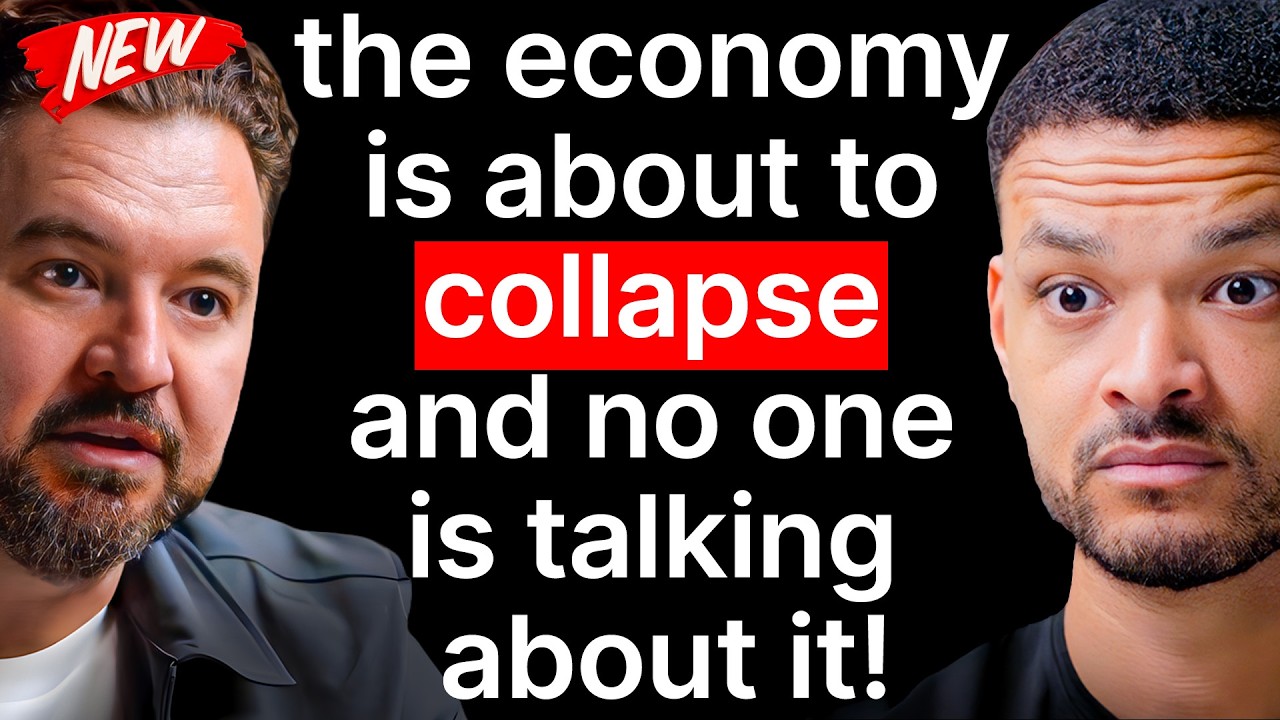
Daniel Priestley details how AI is reshaping traditional jobs and unlocking rapid entrepreneurial opportunities, with insights into idea validation, personal branding, and the future of business.
AI Disruption Sparks a New Age of Entrepreneurial Opportunities
In a riveting episode of The Diary Of A CEO, entrepreneur Daniel Priestley dives deep into the seismic impacts of AI on traditional jobs and the explosive opportunities unfolding for entrepreneurs. He frames the conversation around a fundamental shift in the economy where AI not only disrupts established industries but also creates niches ripe for innovative, nimble businesses.
In this episode, Priestley explains that while blue collar jobs have historically been devalued—sometimes even paying less than white collar professions—the reordering of value chains in the new AI-driven landscape could see trades like plumbing and electrical work earning more than conventional professional roles. "Plumbers regularly earn more than lawyers," he notes, challenging conventional wisdom. This dramatic comparison provides a stark picture of how the economic hierarchy is poised for reversal.
The Dual Nature of AI Disruption
Priestley outlines two key forces at work in this new era. The first is the ability of AI to replace human brainpower in tasks demanding productivity. The second force is the rise of robotics that combine intelligence with physical capabilities. He elaborates by highlighting a demonstration in China where advanced robots could execute backflips and land perfectly, illustrating just how rapidly robotics is advancing. "When you combine intelligence with the disruption of our physical form, it begs the question: where do we fit in?" he wonders.
These forces are not isolated disruptions but interact to set off a monumental shift, much like the transition from an agricultural age to an industrial one—a change he compares to events that occurred 250 years ago. However, the pace of transition is much faster today. Traditional infrastructure takes decades to build, whereas AI and internet-based solutions unfold almost instantaneously. In his view, the online rollout of AI capabilities means that a single breakthrough—for example, an AI learning to diagnose a disease in one hospital—can immediately be implemented worldwide.
The Jevans Paradox and Exponential Opportunity
A pivotal concept discussed by Priestley is the Jevans Paradox. This paradox posits that when innovation reduces the cost and complexity required to do things, it not only democratizes access but also generates entirely new avenues for value creation. He draws parallels with the evolution of content creation, where platforms like YouTube have reduced the cost and team size required to produce content. In his own words, "It used to take 150 people to make a TV show or a movie. Now it's 5 to 10 people making YouTube videos as a little team."
Taking this analogy further, Priestley envisions a vast landscape of micro-software companies that can be launched with minimal resources. Imagine a future where a handful of entrepreneurs leverage AI tools to build bespoke software products, with each catering to a specific niche market. The lowered entry barriers mean that instead of a few large companies dominating the market, millions of tiny yet profitable businesses could coexist, each built on the simple steps of identifying a need, creating a community, and rolling out innovative solutions.
Embracing the Entrepreneurial Mindset
A recurring theme throughout the discussion is the importance of cultivating key entrepreneurial skills. Priestley urges listeners to develop their personal brand not to become influencers necessarily, but to position themselves as recognized experts within their niche. "Everyone should build a little bit of a personal brand," he asserts. This network, he explains, will enable people to quickly deploy and capitalize on emerging opportunities.
He also stresses that learning how entrepreneurs think and behave is critical. Rather than simply following the crowd, aspiring business owners should adopt a systematic approach through what he calls a "value creation loop." This loop consists of six well-defined stages:
- Founder Opportunity Fit: Finding an idea that resonates with your personal goals and interests.
- Validation: Testing the market and seeing if your idea has genuine traction through low-cost experiments like waiting list campaigns.
- Product-Market Fit: Ensuring your product or service meets and exceeds customer expectations.
- Go-to-Market: Making early sales and establishing a foothold in the market.
- Scale-Up: Gradually increasing your customer base and operational capacity.
- Exit: Planning an exit strategy after demonstrating sustained success.
This systematic method allows entrepreneurs to test their ideas cheaply and quickly before scaling, reducing the risk of large-scale failures. Priestley shares a practical example: by launching two ideas concurrently and inviting potential customers to join waiting lists, he was able to see which concept resonated more before raising capital. One idea attracted 750 subscribers while the other garnered 4,500. The latter, despite not being his initial favorite, clearly satisfied a larger unmet need since it then helped secure £250,000 in angel investment within a matter of weeks.
AI’s Financial Implications and Industry Transformation
Beyond the immediate opportunities available to entrepreneurs, Priestley lays out a cautionary tale about the financial underpinnings of the AI boom. He points out that every query made on an AI platform involves sending a request to enormous data centers—massive collections of computers housed in warehouse-like facilities. These computers have a lifespan of only 3 to 4 years, after which they must be replaced.
Martin explains, "Every time you go on AI, you're actually connecting to a big computer in a Walmartized building somewhere." The forecast is staggering: in the coming year alone, $650 billion will be spent on data centers, a figure he compares to giving every person in America a high-end smartphone along with AirPods. Yet, he highlights an underlying economic imbalance; while consumers only pay a fraction of what these infrastructure costs represent, the model is unsustainable in the long run. He warns that this massive spending could lead to a financial meltdown by 2029—a dire prediction that reflects the catastrophic side of exponential technological advancement.
Turning the Tide: Skills to Survive in an AI World
In view of such sweeping changes, what exactly will safeguard careers and ensure continued prosperity? Priestley is resolute in his belief that developing and nurturing an entrepreneurial mindset is not just an option—it is imperative. He posits that in an era where AI can generate content and automate countless processes, the unique human ability to forge real connections and deliver authentically personal experiences becomes even more valuable.
For example, he contrasts mediocre, generic content with the holding power of authentic personal narratives. "Relatable beats impressive," he remarks, emphasizing that content resonating with genuine human experience builds stronger parasocial relationships compared to content that is merely packaged and generic. This means that professionals who can offer something truly unique—their personal story, their trials and triumphs—hold an invaluable asset in a market increasingly saturated with AI-generated output.
Building a Personal Ecosystem
Priestley goes beyond the simple act of content creation. He stresses the importance of integrating various aspects of business—from live events and podcasts to software offerings and educational content—into a cohesive ecosystem. Consider the example he shared about custom-built Software as a Service (SaaS) products. A simple tool like an applicant tracking system (ATS) can be enhanced by coupling it with personalized training, community events, and multi-channel content. Such an integrated approach not only differentiates a product in a commoditized market but also builds a defensible barrier against replication.
This comprehensive strategy echoes the idea that success does not come from doing one thing well but from creating a system where every component reinforces the other. The innovation is not limited to technology alone; it is equally rooted in creating and nurturing vibrant, engaged communities. Even as AI tools reduce the cost and effort required to launch software products, the true value lies in the human touch—organizing face-to-face events, hosting engaging dinners, and facilitating unforgettable retreats.
The Future of Employment and Entrepreneurial Ventures
A sharp contrast emerges when Priestley compares the current moment with historical economic transformations. He notes how the industrial revolution took decades to fundamentally reshape society. In frontier times, industry leaders required vast resources and large teams to drive innovation. Today, technology enables a small team of 5 to 10 people to generate a wildly successful business that might conventionally have demanded significantly more resources.
He contends that while the route to building a massive enterprise may now be more competitive and volatile, the potential for creating small but sustainable businesses has never been better. Most people no longer desire to chase gargantuan corporate ambitions. Instead, they seek lifestyle businesses that offer flexibility, meaningful work, and an opportunity to balance professional achievements with personal fulfillment. Whether it’s a niche software solution or a content-driven community, the emphasis is shifting from size to quality and agility.
Real-World Experiences vs. AI Commoditization
Priestley further explains why the human element remains irreplaceable, even in a world awash in AI-produced content. During the discussion, he shared a personal anecdote about his most well-performing post—his marriage proposal. "There’s no AI that has ever gotten down on one knee and told someone they love them," he said. Such irreplaceable, empathetic human moments create a depth of narrative that no algorithm can mimic.
For instance, consider the difference between conventional content and a live event. While an AI might churn out endless pieces of content, it cannot host a dinner party, step up on stage, or create a communal experience that resonates on a deeply personal level. These are the experiences that not only foster community but also create trust and loyalty—an ecosystem that AI alone cannot build.
Strategies for Opportunity Validation and Rapid Execution
In discussing his entrepreneurial strategy, Priestley delves into the meat of what makes an idea successful. Validation, he insists, is not optional. Adequate market research and real-world testing are critical. He recounts how, with two competing ideas, he utilized waiting list campaigns to gauge market interest. The idea that captured the imagination of a larger group—illustrated by a waiting list of over 4,000 people—validated itself by tapping into a genuinely unmet need. This process of fast, cheap experimentation is at the heart of what makes entrepreneurship viable in the modern world.
The ingenuity of this method lies in its simplicity: rather than pouring resources into a full-scale launch, entrepreneurs should design experiments that clearly indicate market appetite. Once validated, the next steps involve iterating the product until a perfect product-market fit is achieved. Once confirmed, scaling becomes the natural progression. Finally, with a validated, scalable model in place, an exit or continued value creation becomes the blueprint for sustainable business growth.
The New Contours of Software Businesses
One of the most intriguing prospects outlined in the conversation is the emergence of small SaaS companies in a world driven by AI. Traditional software companies required heavy investments, large teams, and lengthy development cycles. Today, AI-driven tools trim these barriers considerably. Priestley illustrates this by highlighting his own experience of reengineering an applicant tracking system. What previously took extensive time and considerable finances can now be accomplished in weeks.
He highlights the dramatic reduction in cost and complexity: "What would have taken 18 months or cost $500,000 can now be done in a week with AI assistance." This efficiency not only accelerates time-to-market but also democratizes access. With AI lowering the barrier, virtually anyone with a compelling idea and basic technical knowledge can launch a software product. The result is a massive proliferation of niche products, each tailored for specific audiences and needs.
Community, Connection, and the Human Edge
Amid the myriad opportunities that AI brings, Priestley never loses sight of the enduring need for human connection. In a world where tools and content are increasingly automated, the experiences that foster real relationships stand out. He delves into why content creation must evolve to remain valuable. The future belongs to those creators who harness their personal experiences and unique voices, rather than those who churn out generic, algorithmically generated content.
"Find something that only you can say," he advises. Drawing on both historical and personal anecdotes, he emphasizes that technology can be an enabler, but it cannot replace genuine human interaction. The analogy is clear: while AI can handle routine tasks, it cannot replicate the nuance of personal storytelling or the warmth of an in-person meeting. These are the commodities that build lasting bonds, drive community loyalty, and create defensible business models over time.
The Blend of Digital and Physical Worlds
Priestley envisions a future where successful businesses are those that combine digital efficiency with real-world engagement. The concept of algorithmic media—where platforms determine what people see based on the best, most interesting content of the day—contrasts sharply with the old paradigm of social media. However, as algorithmic media takes hold, the distinguishing factor becomes personal authenticity. Consumers will gravitate toward brands and creators that integrate live events, face-to-face interactions, and community-building practices.
For example, a small business might offer an integrated ecosystem that combines bespoke software, engaging online content, and regular live gatherings. Such a model not only leverages the power of AI to streamline operations but also ensures that the human touch remains at its core. In doing so, it creates a resilient, multi-dimensional brand that is hard to imitate.
Conclusions: Navigating the AI Future with Agility
Daniel Priestley’s insights paint a picture of a radically shifting economic landscape where AI serves both as a disruptive force and a wellspring of opportunity. Entrepreneurs and professionals are encouraged to harness this dual-edged power by adopting a systematic, agile approach to innovation. By focusing on rapid idea validation, personal branding, and the unique value of human experience, individuals can thrive even as traditional roles and business models are upended.
The key takeaway is clear: while AI may level many conventional playing fields, it also opens up unprecedented avenues for creativity and connection. Whether you are building a new SaaS tool, launching a niche content channel, or simply redefining your own career path, the future will favor those who blend the efficiency of AI with the irreplaceable power of human uniqueness.
In summary, Priestley’s message is one of both caution and optimism. He warns that the current financial model underlying the rapid expansion of AI capabilities could lead to a major meltdown if left unchecked. However, he is equally optimistic about the opportunities—whether it’s the creation of millions of micro-businesses, the rapid development of novel software solutions, or the lasting impact of genuine human connection.
Entrepreneurs are urged to prepare by focusing on what only they can bring to the table—a personal narrative, real-world experience, and the ability to build communities that matter. These are the true differentiators in an age where AI can replicate almost any routine task.
Final Thoughts
Navigating the AI revolution requires a shift not just in technology but in mindset. As Priestley succinctly puts it, the future belongs to those who can quickly validate ideas, harness AI to streamline execution, and, most importantly, create meaningful human connections. The entrepreneurial landscape is being remade before our eyes, and understanding these dynamics is crucial for anyone looking to thrive in the coming decades.
For a deeper dive into these transformative ideas, you can watch the full session here: Daniel Priestley: AI Will Make Plumbers Earn More Than Lawyers! (2029 PREDICTION).
As the AI wave reshapes industries, one thing is certain: those who embrace its opportunities while holding on to the power of authentic human experience will be best positioned for long-term success.