7 Shocking Global Shifts: Trump, Israel, NATO, and More
 Factverse Insights|Politics|9 min read|Apr 9, 2026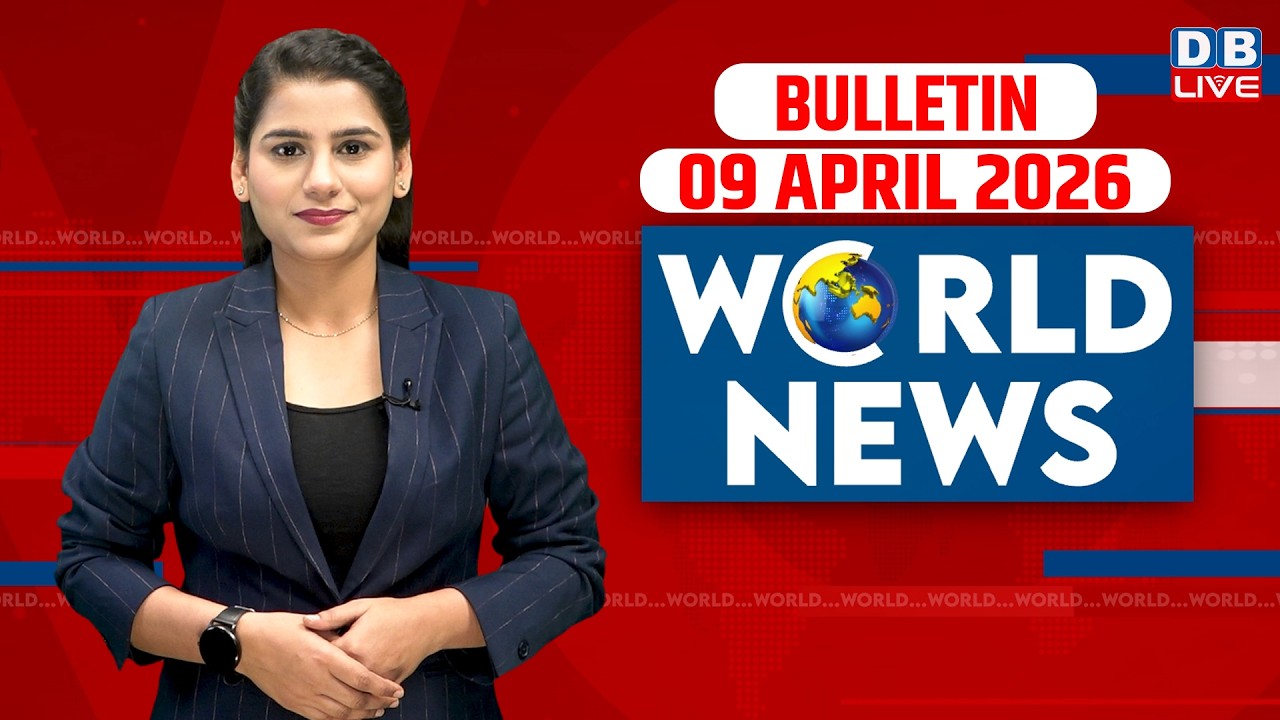
Explore the latest global crisis updates from West Asia to NATO tensions, including Trump’s bold statements, Israel’s military actions, and unexpected geopolitical shifts.
In this episode of DB Live, the presenter unfolds a series of dramatic global events shaking West Asia, NATO alliances, and South Asia. The analysis covers military escalations, political ultimatums, and startling new developments from leaders like Donald Trump and Benjamin Netanyahu. This article brings together all the key insights from the episode so you get the full value without watching the video.
What is the Current Situation in West Asia?
The video opens by detailing an alarming military buildup in West Asia as tensions rise again, especially around the ceasefire discussions. Iran has accused the United States and Israel of breaching three critical conditions intended to enforce a ceasefire. In sharp contrast, U.S. President Donald Trump has reiterated his intransigence by refusing to withdraw American troops from the region. Trump’s stance is clear: he insists that all military assets remain stationed near Iran until a comprehensive deal is fully implemented. Trump stressed on Truth Social, saying, "America’s ships, jets, soldiers, and all military equipment will remain in and around Iran until the true agreement is implemented."
The situation accelerates when Israeli Prime Minister Benjamin Netanyahu makes no secret of Israel’s ongoing military commitment. Netanyahu declared that the operations are far from over, warning, "Our finger remains on the trigger," after reporting a major attack in Lebanon that took the life of senior Hezbollah aide Ali Yousuf Harsh Mura and resulted in numerous civilian casualties. In response to these developments, Iran’s Foreign Minister Abbas Harashi delivered a stern ultimatum, stating, "America must choose: a ceasefire or continued warfare through Israel. They cannot have both."
With these hostile exchanges and allegations of ceasefire violations—allegations citing unauthorized drone incursions in Iranian airspace and non-inclusion of certain regions like Lebanon in the ceasefire—the already volatile environment in West Asia is showing signs of spiraling back into full-scale conflict.
How Are the United States and Its Allies Reacting?
As the world watches the explosive developments in West Asia, the U.S. stance remains defiant. President Trump has been unyielding in his approach, dismissing any suggestion of withdrawal. This hardline policy has exacerbated tensions not just with Iran, but among other global partners as well. During his address, Trump threatened, "If things do not go our way, an unprecedented level of gunfire may be unleashed," hinting at a readiness to escalate military conflict if his conditions are not honored.
Beyond the regime of Trump, his comments have sparked serious debates among NATO allies. Several European members have expressed frustration over the game plan in the region. NATO Secretary-General Mark Rue met with Trump in Washington, where he articulated concerns regarding the cohesion and commitment among member nations. In a telling remark about the alliance’s reliability during crises, Trump warned his NATO partners that if they fail to step up when needed, they might find themselves abandoned when conflicts reignite. The episode notes that this internal rift, catalyzed by America’s harsh rhetoric, has added new dimensions to NATO’s defensive strategy and raised the specter of a potential realignment.
Furthermore, tensions were amplified when Trump directed provocative comments at Greenland—a strategic region that has been a matter of contention, especially with European allies rallying in defense of its autonomy. While Denmark, a NATO member, found itself drawn into this dispute, countries like France have taken steps to bolster their military readiness, including increasing nuclear and missile defense capabilities. The episode highlights that France has allocated an additional 36 billion Euros over the next four years to upgrade its arsenal, clearly demonstrating the far-reaching impacts of these geopolitical escalations.
Why Are the Ceasefire Conditions So Contentious?
One of the central themes of the episode is the debate over the ceasefire’s conditions. Iran’s Parliament Speaker Muhammad Bagher Galib has been vocal in his criticism of the current ceasefire arrangement by emphasizing that three out of ten key conditions have already been flouted by the U.S. and its allies. According to Galib, the first violation pertains to the non-enforcement of the ceasefire in Lebanon, which was supposed to be a critical component of the agreement. He further highlighted an incident involving a drone that entered Iranian airspace, noting that it was downed in the Larq area of the Fars province, marking the second violation.
The third violation cited by Galib refers to a dismissive attitude towards Iran’s rights concerning uranium enrichment. This point has ignited further dispute since Israel and the United States have consistently maintained that Lebanon is not a part of the ceasefire framework. U.S. Vice President JD Vance reinforced this view by stating that the Lebanese issue is distinct and was never in the ceasefire package to be negotiated with Iran. Moreover, Pakistan’s Prime Minister Shahbaz Sharif, often credited with endorsing the ceasefire, rejected these claims and affirmed that respect for Lebanon and regional peace remains integral to the ceasefire efforts.
The sequence of these events paints a picture of an already fragile truce being undermined by multiple breaches, directly linking these violations to the broader diplomatic standoff. As tensions continue to escalate, the issue of trust becomes central: with both sides accusing the other of undermining vital agreements, the global community remains uncertain about the durability of the current ceasefire.
What Do the Military Escalations in Lebanon Signal?
The most harrowing news in the episode was the report of an unprecedented military assault on Lebanon by the Israeli Defense Forces (IDF). In a swift and aggressive operation, more than 50 fighter jets of the Israeli military executed 100 airstrikes within a span of 10 minutes. These strikes targeted key regions including Beirut, the Bekaa Valley, and southern Lebanon, resulting in over 254 deaths and more than 1,100 injuries. The intensity and speed of the assault have raised alarms across the international community.
Lebanese President Joseph Aoun condemned what he termed as a "crime against humanity," asserting that Israel had once again disregarded efforts to secure regional stability. In unequivocal terms, Aoun stated, "Israel is betraying all humanitarian values and adding another atrocity to its record," as rescue teams continue to search through the wreckage for survivors. This brutal display of force not only underscores Israel’s enduring commitment to its strategic objectives but also brings into question its approach towards civilian safety amid ongoing hostilities.
Moreover, in an environment where trusted mediations are increasingly undermined, Iran’s anger deepens. As part of its retaliatory messaging, Iran’s Foreign Minister Abbas Harashi emphasized that the current ceasefire proposals are mutually exclusive: choosing the ceasefire would entail accepting terms that ignore the continuous hostilities against Iran through its ally, Israel. This dichotomy has not only stalled negotiations but has also forced global powers to critically assess the viability of any immediate de-escalation in the region.
How Do Regional Conflicts Affect Global Alliances?
The ripple effects of the West Asian conflict extend far beyond its geographical borders. One of the most significant consequences highlighted in the episode is the fragmentation within NATO. The alliance, traditionally viewed as a unified front against common threats, appears to be fracturing under the pressures of divergent national interests. Trump has made it clear that his disappointment in NATO members goes beyond words. He criticized them for withdrawing support at a critical juncture when decisive military action was required.
This internal discord has resulted in a noticeable shift among European countries. With trust in the U.S. waning, nations such as France are re-evaluating their security policies, opting to invest even more heavily in their independent defense strategies. France, for instance, is aggressively upgrading its nuclear deterrence capabilities and missile drone defenses to counter any potential regional conflict. France’s Defense Minister Catherine Waterin stated, "Deep geopolitical shifts demand that we bolster our security independently," indicating a potential long-term realignment of transatlantic security arrangements.
Furthermore, discussions at the NATO level have brought forward questions about the alliance’s future. Trump’s message resonated with many European leaders who feel that the U.S. may not always have their back in times of crisis. His unyielding rhetoric and the subsequent reticence among NATO partners have raised concerns that the alliance may soon face significant restructuring, or even that the United States might eventually reconsider its commitments within the organization.
What Are the Implications of the Tensions in Pakistan and Afghanistan?
While West Asia dominates headlines, the episode sheds light on another critical and volatile region: the border between Pakistan and Afghanistan. Reports indicate that tensions have been rising as border clashes and disputes escalate. In an attempt to mediate, China recently stepped in to facilitate ceasefire discussions between the two nations. However, despite a week-long negotiation, no tangible agreement was reached.
Chinese spokesperson Mao mentioned that the talks were constructive, with officials from all sides engaging in open, practical discussions. Nevertheless, the meeting ended without settling the contentious issues, largely due to aggressive stances from the Taliban. Afghan officials were particularly vocal about their dissatisfaction with Pakistan’s handling of the Taliban concerns, leading to a sharp exchange of charges.
Afghanistan’s acting Foreign Minister Amir Khan Muttaqi accused Pakistan of harboring elements that could reignite conflict, implying that the continuation of military operations near the disputed border was unacceptable. Pakistan, on its part, maintained its position by stating that until extremist groups like the TDP are completely eradicated from Afghan territory, there can be no lasting peace. This exchange illustrates the deep-rooted mistrust between the two countries and the challenges facing efforts to negotiate a sustainable ceasefire in the region.
The failure of these peace talks serves as a reminder that even with external mediation, longstanding historical and geopolitical grievances can hamper the pursuit of lasting peace. As global stakeholders keep a wary eye on the region, the likelihood of renewed conflict between Pakistan and Afghanistan remains a serious concern.