21-Hour US-Iran Talks: Key Insights & Unanswered Questions
 Factverse Insights|Politics|16 min read|Apr 12, 2026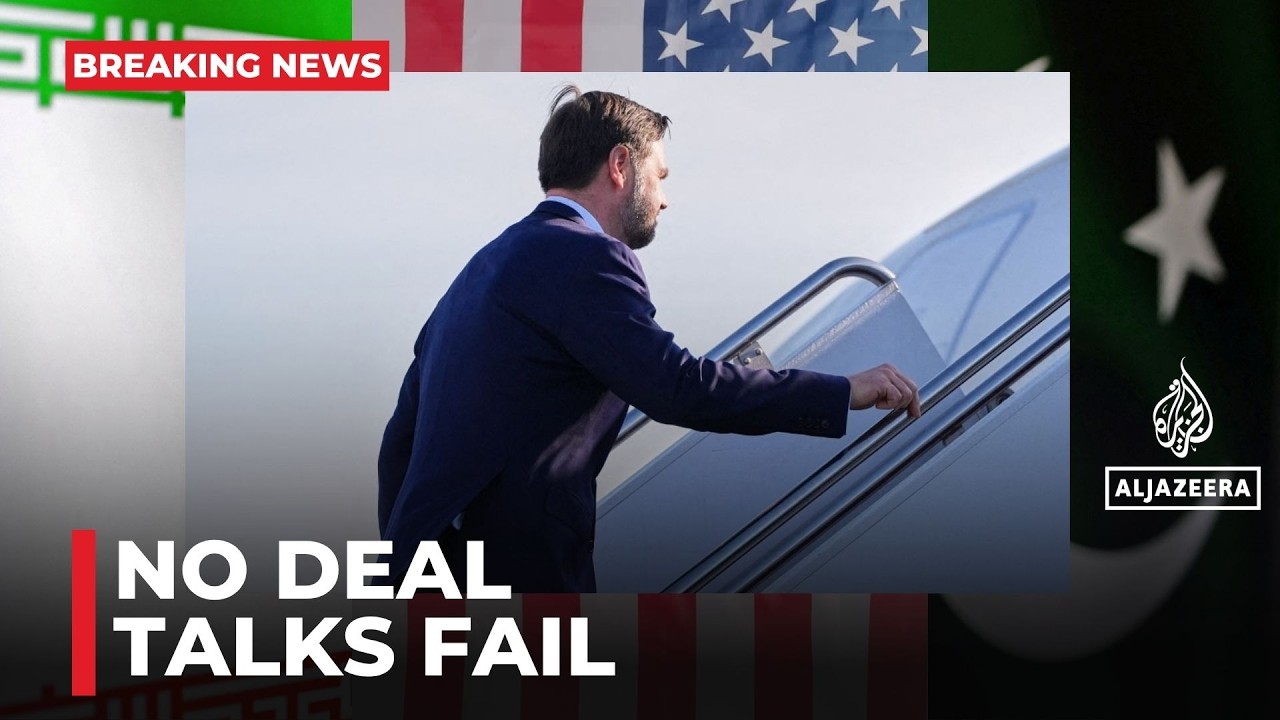
JD Vance explains why after 21 hours of intense negotiations between the US and Iran no deal was reached, highlighting the red lines and the challenges of bridging nuclear commitments.
In this comprehensive report from Al Jazeera English, US Vice President JD Vance discussed the results of 21 hours of intense negotiations between the United States and Iran. The talks, held in Pakistan under the mediation of high-level Pakistani officials, ended without an agreement. This article unpacks the key insights from the discussion, explains what the US red lines really mean, and explores the wider implications for the ongoing challenges in US–Iran diplomacy.
What Happened in the 21-Hour Negotiations?
In a press briefing following the marathon talks in Pakistan, JD Vance explained that despite engaging in substantive discussions with the Iranians, the two sides were still far apart. He was blunt in his remarks: "We have been at it now for 21 hours... and the bad news is that we have not reached an agreement." Vance noted that although the Pakistanis played an impressive role in facilitating the dialogue, the Iranians did not accept the final US terms. The remarks underline an important point: while prolonged negotiations produced several rounds of discussion, the primary sticking point remained the core issue of Iran’s nuclear commitment.
The talks, which lasted for nearly a full day, revolved around significant topics such as Iran’s nuclear program, respective red lines, the status of frozen assets, and the control of critical maritime chokepoints like the Strait of Hormuz. While Vance did not divulge every detailed nuance of the negotiations, he made clear that the central issue remains the Iranian commitment to never seek a nuclear weapon. This is the non-negotiable red line of the US, emphasizing the need for a long-term, unequivocal promise from Iran.
Why Is the Nuclear Commitment So Crucial?
At the heart of the negotiations lies the question of nuclear proliferation. Vance stressed that the US demand is not limited to halting current enrichment activities but extends to preventing any future development of a nuclear capability. "We need to see an affirmative commitment that they will not seek a nuclear weapon and they will not seek the tools that would enable them to quickly achieve a nuclear weapon," he said.
This firm stance represents a clear pivot from earlier rounds of indirect negotiations when discussions were primarily about slowing or pausing enrichment. The new terms target the very essence of Iran’s nuclear ambitions by seeking a long-term assurance. This shift has widened the gap between the two sides, as it raises the stakes considerably. The Iranians, who have maintained that their nuclear program is for peaceful purposes, seem not ready to commit to such an absolute ban that would restrict their future autonomy.
What Were the Negotiation Hurdles Beyond Nuclear Concerns?
Beyond the nuclear dimension, several issues surfaced during the negotiations. One of these was the status of Iranian frozen assets held in the United States. There was discussion about potentially unfreezing these assets if progress was made, but the talks did not advance to the point where any agreement on this matter could be reached. Additionally, the dynamic around the Strait of Hormuz was debated fiercely.
For a while, the US administration had sent mixed messages about the strategic importance of the Strait. At one point, President Trump had suggested the region was of little consequence to American interests, while later remarks reinstated its position as central to US demands. This inconsistency added another layer of complexity to the talks. The Iranians, on the other hand, were resolute in maintaining their influence in the region, making matters even more challenging for the US negotiators.
The multifaceted nature of the negotiation topics meant that addressing the nuclear question was only one part of a larger puzzle. Discussions also touched on broader issues of regional influence, economic sanctions, and the strategic assets which play a role in the overall US-Iran standoff. The inability to reconcile these diverging positions contributed significantly to the failure of reaching an agreement this time.
How Did the Mediation by Pakistan Influence the Talks?
An essential aspect of the negotiations was the role played by Pakistan. Both JD Vance and local commentators acknowledged that the Pakistani mediators were instrumental in bridging the initial communication gap between the US and Iran. Vance complimented the Pakistani hosts, stating that "whatever shortcomings of the negotiation it wasn't because of the Pakistanis... who did an amazing job and really tried to help us and the Iranians bridge the gap."
This acknowledgment is important because it highlights the possibility of continued mediation, even if the current round ends without a deal. The experience of the Pakistani negotiators suggests that expert mediation can help keep the dialogue channel open, potentially laying the groundwork for future meetings. The fact that the negotiations persisted for 21 hours indicates the commitment from all sides to explore every avenue, even if progress is incremental and subject to eventual breakdowns in consensus.
What Does the US Red Line Mean for Iran?
For the United States, the ultimate goal remains clear: there must be an unwavering commitment from Iran to forgo nuclear weaponization. Vance’s candid remark that the failure to reach an agreement is "bad news for Iran much more than it's bad news for the United States" underscores the high stakes for Tehran. By setting a red line—demanding a long-term commitment to never develop nuclear weapons—the US is effectively redefining the negotiation terms.
This uncompromising stance has long-term implications. Firstly, it signals to other global players the seriousness with which the US views non-proliferation. Secondly, it places pressure on Iran to reassess its strategic priorities, especially when its nuclear program has been a longstanding point of contention in international diplomacy. However, the Iranians seem reluctant to accept a framework that could restrict their future capabilities. This leaves the door open for further debate but underscores a fundamental impasse that will require delicate negotiation in future rounds.
What Role Did Senior US Officials Play During the Negotiations?
Throughout the 21-hour negotiation process, communication between JD Vance and other key US figures was constant and strategic. Vance revealed that he and his team maintained a steady link with President Trump and top national security officials, including Admiral Cooper, Pete, and Marco. This tight coordination ensured that the US stance remained consistent, even as the talks evolved.
At one point, Vance noted that he was in touch with the president as many as a dozen times over the course of the negotiations. This consistent communication underscores the importance that the US leadership placed on these discussions, even as disagreements surfaced. While President Trump appeared to position himself as having already 'won' the war, his team’s persistent involvement indicates that the US was still actively engaged in steering the negotiation process according to its stringent demands.
How Does the Final Offer Affect Future Negotiations?
JD Vance’s remarks left a clear impression: the US had put forward its best and final offer during the talks, a proposal that remains on the table for the Iranians. Vance emphasized that they delivered a comprehensive package that reflected flexibility on certain points but remained firm on critical red lines.
The nature of this final offer is a matter of considerable interest. Although details were not fully disclosed, it is evident that the package was structured to address a range of issues—from the immediate concerns of nuclear non-proliferation to wider aspects such as the frozen assets and control of key maritime passages. The finality of the offer suggests that the US is now expecting the Iranians to either accept or decline the comprehensive terms, leaving little room for further modification from the American side.
This take-it-or-leave-it approach might foreclose some avenues for incremental progress but also sets a clear baseline for future talks. Should the Iranians respond with a counter-proposal or indicate any willingness to negotiate the core principles, it might revive diplomatic efforts. However, the current impasse suggests that any further negotiation will likely have to start from this fixed position on non-proliferation and strategic red lines.
Why Does the Strait of Hormuz Remain a Central Issue?
A topic that repeatedly surfaced during the discussions was the status of the Strait of Hormuz. This strategic chokepoint is essential not only to global oil transportation but also to the broader geopolitical stability in the region. Earlier reports suggested that President Trump was ambivalent about the region’s importance; however, subsequent statements made it clear that the Strait was crucial to US demands.
For the Iranians, control over the Strait is both a strategic asset and a bargaining chip. The US position, oscillating between dismissive and highly critical of the Strait’s security, reflects the internal debate within the American administration about how best to leverage this asset in negotiations. The conflicting public statements add to the complexity, leaving both international observers and the Iranian delegation questioning the consistency of US policy.
In practical terms, the Strait of Hormuz has been used as a litmus test for negotiating leverage. While the US might not depend on the oil flows through the Strait to the same extent as other nations, its insistence on open access is part of a broader strategy aimed at curtailing any potential Iranian dominance in the region. Thus, any deal that neglects this issue would likely fail to gain broad support both domestically in the United States and internationally.
What Are the Broader Geopolitical Implications?
The failure to secure a deal after 21 hours holds wider implications for the regional and global geopolitical climate. By failing to secure an agreement, the talks have reiterated the depth of mistrust between the United States and Iran, emphasizing that bridging the historical and strategic divides remains a formidable challenge. The situation is further complicated by the diverse interests at play, from the economic sanctions regime to the alliances each country has fostered across the region.
Internationally, the talks serve as another chapter in a long saga of diplomatic back-and-forths. For countries in the Middle East and beyond, the outcome is a reminder of the persistent volatility in the region. The US’s insistence on long-term commitments regarding nuclear non-proliferation could embolden other nations to demand similar stringent measures from their adversaries or potential rivals. On the other hand, Iran’s eventual response to the US demands could shape the future direction of its foreign policy, potentially prompting shifts in its regional alliances and security strategies.
Moreover, the role of mediators like Pakistan has garnered attention. Their success in bringing both sides to the same table highlights the potential for third-party countries to act as neutral grounds for resolving some of the most pressing international disputes. If future rounds of talks are to be successful, maintaining open channels of communication, as well as leveraging the mediating platforms provided by countries like Pakistan, will be critical.
How Does This Develop Under the Shadow of US Domestic Politics?
While the negotiations are ongoing, it is worth noting the domestic backdrop against which these talks are taking place. President Trump, for instance, has made several public statements that suggest a desire to move on from the Iran confrontation regardless of the outcome of these talks. Trump’s cryptic mention that "whether we make a deal or not it makes no difference to me… we've already won" underscores a broader political narrative that the administration is willing to accept inconclusive results if they serve a larger geopolitical calculus.
This approach sends mixed signals. On one hand, it reinforces the notion that the US is uncompromising about its nuclear non-proliferation demands. On the other, it suggests that the political leadership may be more concerned with headline victories than with the intricacies of long-term diplomacy. Such a stance could complicate the negotiation process further, as it might encourage the Iranian delegation to adopt a more defiant posture, banking on the belief that the US is prepared to exit the talks regardless of the outcome.
The implications of this dynamic are considerable. A perceived lack of urgency on the part of the US president may embolden Iran to hold out for better terms or even to reject the current proposal outright. Conversely, it might prompt the US team to double down on a hardline stance, leaving little room for compromise. Either scenario risks entrenching the existing impasse and prolonging the overall diplomatic deadlock.
What Does This Mean for Future Diplomatic Engagements?
Despite the setback in obtaining a deal, both sides appear to be keeping their options open for further dialogue. The Pakistani mediation channel, in particular, remains active and could serve as the foundation for future rounds of negotiations. This is a critical point: while the current 21-hour session ended without an agreement, it does not spell the end of diplomatic efforts.
Experts suggest that the absence of a breakthrough today should not be interpreted as a definitive failure of diplomacy. Instead, it highlights the complexity of modern geopolitical negotiations, where issues of national security, economic interests, and international alliances intersect. Future talks may need to find innovative approaches that address the core concerns of both sides—especially the US insistence on a verifiable, long-term commitment from Iran regarding its nuclear program.
In many respects, the current impasse is emblematic of an evolving landscape in international diplomacy. The shifting parameters of negotiation—from immediate tactical concessions to long-term strategic commitments—require that both parties remain agile. As such, while today’s outcome might seem like a setback, it also opens the door for recalibrated strategies and fresh approaches in future meetings.
What Can We Expect Moving Forward?
Looking ahead, several factors will likely influence the next chapter of US-Iran negotiations. First, the final offer left on the table by the US suggests that Washington is sticking rigidly to its absolute red lines. Any sign from Iran that they are willing to compromise on the overarching non-proliferation commitment would be a significant breakthrough. However, given the current context, there is considerable skepticism about whether such a concession is feasible.
Second, indirect signals such as the discussions around the frozen assets and the strategic importance of the Strait of Hormuz continue to complicate what might otherwise be a straightforward dialogue on nuclear policy. While these issues are undoubtedly critical, their resolution will depend on a delicate balancing act from both sides. They must consider not just the immediate tactical benefits but also the long-term geopolitical implications of any agreement.
Third, the internal dynamics within the US administration cannot be ignored. With President Trump displaying a willingness to move on regardless of the negotiations’ outcomes, there is a real possibility that domestic political considerations may continue to influence the negotiation strategy. His apparent detachment, as seen when he was spotted at a UFC match in Miami during the talks, contrasts sharply with the high-stakes nature of the discussion, underscoring a potential disconnect between diplomatic engagements and broader political narratives.
Ultimately, the negotiation process now rests on whether the Iranians are willing to engage seriously with the US final offer. With a comprehensive proposal on the table, which encompasses not just nuclear issues but also economic and regional security considerations, the decision rests on Iran’s next move. If they choose to engage constructively, the mediation channel provided by Pakistan could facilitate further discussions. If not, both sides may need to regroup and consider alternative strategies, possibly involving more incremental concessions or entirely new proposals.
Conclusion
The 21-hour negotiation session in Pakistan may have ended without a formal agreement, but it has set the stage for the next phase of US-Iran diplomacy. JD Vance’s candid disclosure leaves no doubt that the US red lines—especially the demand for an unambiguous commitment from Iran to never pursue a nuclear weapon—remain non-negotiable. Simultaneously, the role of Pakistani mediators and the discussion on strategic assets such as the frozen funds and the Strait of Hormuz offer glimpses into possible pathways for future dialogues.
While some onlookers may view the outcome as a setback, others see the persistence of dialogue as a positive sign. The fact that both sides maintained open channels for communication—even if only to leave a final offer on the table—indicates that negotiations, though fraught with challenges, are not entirely dead. As the international community continues to watch closely, the next steps will be pivotal in determining whether this latest diplomatic episode becomes a turning point or another chapter in a long series of unresolved tensions.
Frequently Asked Questions
What were the key issues discussed during the 21-hour US–Iran talks? The negotiations focused on Iran’s nuclear program, the demand for a long-term commitment not to pursue nuclear weapons, the status of Iranian frozen assets, and strategic issues related to the Strait of Hormuz. US Vice President JD Vance emphasized that the core aim was to secure an unequivocal, lasting non-proliferation commitment from Iran, making these issues the focal point of the discussions.
Why did the US consider the final offer as ‘best and final’? JD Vance described the proposal as the final and best offer after 21 hours of negotiations because it incorporated both flexibility on some issues and firmness on key US red lines. The US insisted on an unambiguous pledge from Iran not to develop nuclear weapons in the future. This take-it-or-leave-it approach was designed to set clear parameters that, if not accepted, would necessitate a rethinking of the diplomatic strategy.
How did the role of Pakistani mediators impact the negotiations? Pakistan played a vital intermediary role by facilitating direct face-to-face talks between US and Iranian delegates. Their effective mediation helped keep the dialogue channels open and allowed the parties to engage in multiple rounds of substantive discussions over a 21-hour period. This suggests that, despite the lack of a final deal, the mediating channel could prove essential in enabling future negotiations.
What are the future prospects for US–Iran negotiations following this extended session? Although the 21-hour talks ended without an agreement, important communication channels remain open. With a final US offer on the table, prospects depend on whether Iran is willing to negotiate on its nuclear program and other key issues. The persistence of mediation—especially through Pakistani channels—and the possibility of recalibrated strategies indicate that further negotiations could occur, though the core impasse over nuclear commitments will need to be addressed decisively.